What is an Aeroplane Wing Made Of?
When beginners first look at an aeroplane, the wing can seem simple: a long surface that helps the aircraft stay in the air. But real Wing Structure is much more than a flat shape. A wing has to generate lift, carry fuel on many aircraft, support control surfaces, absorb heavy loads, and remain strong through years of vibration, weather, and repeated flights. The FAA explains that wing shape and design are tailored to the aircraft’s intended type of operation, which is why wings can vary so much from one aeroplane to another.
For student pilots, understanding Wing Structure matters because wings are not only aerodynamic surfaces. They are also load-bearing parts of the aircraft, and their shape affects lift, drag, stability, and stall behaviour. NASA’s wing-geometry guidance notes that wing geometry is one of the chief factors affecting lift and drag, which is why even small design choices can change how an aircraft performs.
Before getting into individual parts, it helps to see the whole picture at once.
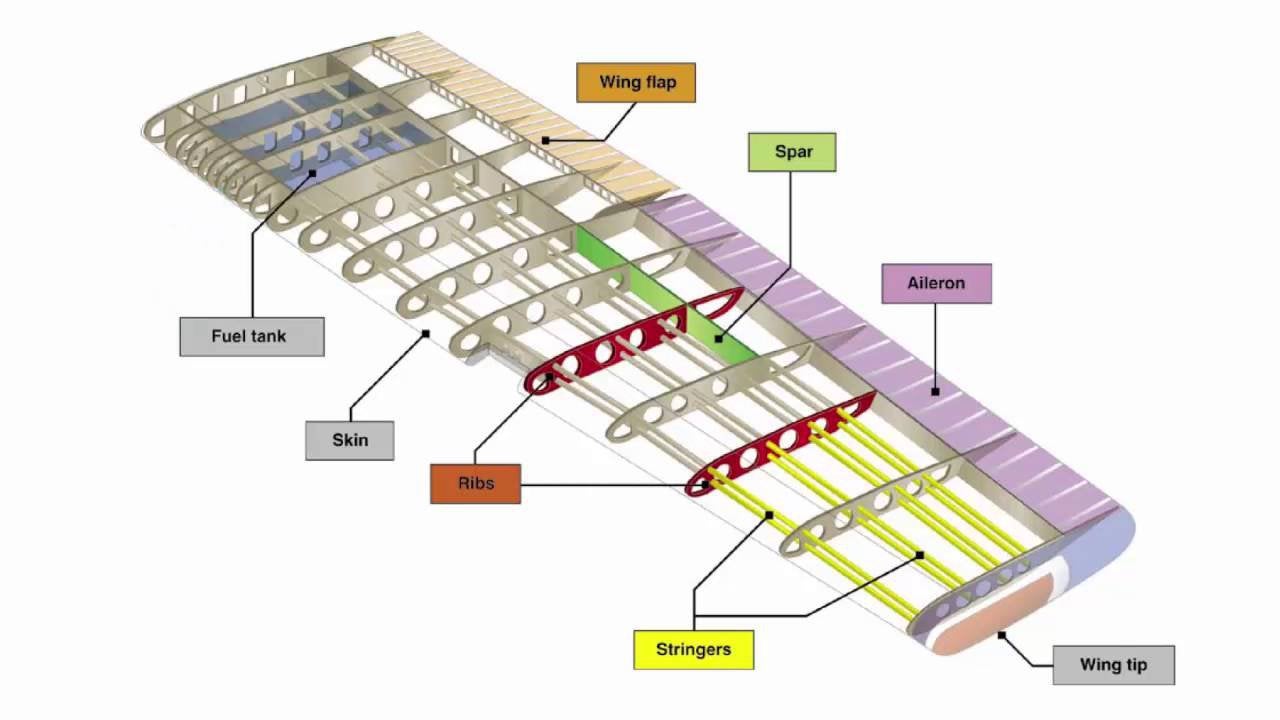
A beginner’s map of the main wing parts
|
Wing part |
What it is |
What it mainly does |
|---|---|---|
|
Spar |
Main internal beam of the wing |
Carries much of the bending load |
|
Ribs |
Internal cross pieces |
Give the wing its airfoil shape |
|
Skin |
Outer covering |
Smooths airflow and adds structural strength |
|
Leading edge |
Front of the wing |
Meets the airflow first |
|
Trailing edge |
Rear of the wing |
Supports control surfaces and shapes airflow leaving the wing |
|
Ailerons |
Hinged outer rear surfaces |
Roll the aircraft left or right |
|
Flaps |
Hinged inner rear surfaces |
Increase lift and drag for takeoff and landing |
|
Wingtip/winglet |
Outer end of the wing |
Helps manage wingtip vortices and efficiency |
That table gives the simple version. To really understand Wing Structure, you need to see how each part helps the wing stay strong and useful in flight.
Why does a wing need an internal skeleton at all?
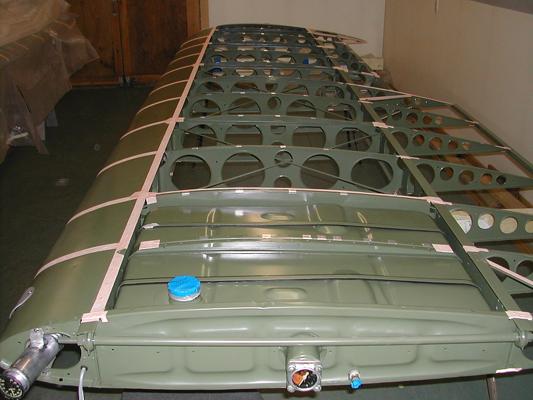
A wing would fail quickly if it were only a thin outer shell. It needs an internal framework to hold its shape and resist the forces created by lift, weight, turbulence, and landing loads. The FAA’s aircraft construction materials explain that an aeroplane wing must be designed for the mission it performs, which is why strength and shape must work together rather than separately.
This is also why wings are closely tied to the rest of the aircraft. If you want the wider picture first, aircraft structure helps show how the wing fits into the full aeroplane rather than sitting there as an isolated part.
What this internal framework really achieves
-
It keeps the wing from bending too easily under load
-
It preserves the wing’s shape so airflow stays predictable
-
It creates a strong base for flaps, ailerons, and fuel storage
What keeps the wing from snapping in the air?
The spar is one of the most important parts of the wing because it carries a large share of the structural load. When the lift pushes the wing upward and the aircraft’s weight pulls through the fuselage, the spar helps resist the resulting bending force. Without it, the wing would not have the strength needed for repeated flight.
For a beginner, the easiest way to think about the spar is as the main beam running through the wing. It is there to keep the wing from folding under pressure. This is one reason Wing Structure is not just about shape. It is also about managing forces that act on the aeroplane every second it is in the air.
What the spar helps the wing do
-
Handle bending loads during flight
-
Support the rest of the internal wing framework
-
Keep the wing strong over thousands of flight cycles
Once the spar is in place, the next step is keeping the wing’s shape consistent from front to back.
Who gives the wing its shape?
Ribs are the parts that help form the wing’s cross-sectional shape, often called the airfoil. If the spar is the backbone, the ribs are the pieces that give the wing its recognisable profile. They help maintain the curved form that allows air to move properly over and under the wing.
That matters because lift depends heavily on shape. NASA explains that wing geometry strongly affects aerodynamic performance, so the rib layout is not cosmetic. It helps preserve the shape that makes the wing useful in the first place.
What do the ribs help the wing do
-
Hold the airfoil shape along the wing
-
Support the outer skin
-
Keep airflow behaviour more consistent across the surface
Once the skeleton is in place, the wing still needs an outer layer to make the structure aerodynamic.
What lets the air flow smoothly over the wing?
The skin is the outer covering of the wing. Beginners often think the skin is only there to cover the inside parts, but it does more than that. It helps create the smooth aerodynamic surface the aircraft needs and, on many aircraft, also contributes to structural strength.
This is one of the points people miss when learning Wing Structure for the first time. The skin is not “just the outside.” It is part of what helps the wing work both aerodynamically and structurally. A rough or damaged surface can affect airflow, which is one reason maintenance matters so much over an aircraft’s lifetime. If you want to follow that idea further, aircraft lifespan shows how long-term use and repeated loads affect aircraft over time.
What the skin helps the wing do
-
Create a smoother airflow surface
-
Add stiffness to the wing assembly
-
Protect internal parts from the outside environment
The front and rear edges of the wing also deserve special attention because they shape how the air meets and leaves the wing.
Why do the front and back edges matter so much?
The leading edge is the front part of the wing, the first section to meet the airflow. The trailing edge is the rear part of the wing where the airflow leaves. These two areas have a huge effect on how efficiently the wing works and how controllable the aircraft feels.
A beginner does not need to memorise every aerodynamic formula to understand this. If air meets the wing poorly at the front or leaves it poorly at the rear, performance suffers. That is why Wing Structure is partly about managing airflow as carefully as it is about managing strength.
What do the leading and trailing edges help the wing do
-
Shape how air first contacts the wing
-
Influence lift and drag behaviour
-
Provide the mounting area for key control surfaces
Those control surfaces are where the wing stops being only a lifting surface and starts helping the pilot manoeuvre the aircraft.
How does the wing actually help the pilot turn?
Ailerons are usually mounted on the outer trailing edges of the wings. They move in opposite directions to help roll the aircraft left or right. NASA’s educational aircraft parts material explains that the hinged outboard section of the wing is the aileron and that it is used to roll the aircraft from side to side.
This is a good moment to remember that Wing Structure is not static. It is not only about holding shape. It also has to support moving parts that let the pilot control the aeroplane in flight. A wing that creates lift but cannot support reliable control surfaces would not be enough.
What do the ailerons help the aircraft do
-
Roll into turns
-
Correct bank angle
-
Improve lateral control in flight
Closer to the fuselage, another set of wing surfaces becomes especially important during slower phases of flight.
What makes takeoff and landing feel more forgiving?
Flaps are mounted nearer the inner trailing edge of the wing. They extend during takeoff or landing to increase lift and drag. NASA’s aircraft-parts guidance notes that flaps are deployed downward on takeoff and landing to increase the amount of force produced by the wing.
This makes flaps one of the most practical parts of the wing structure for a beginner to understand. They help an aircraft operate more safely at lower speeds, which matters when the aircraft is closest to the ground and has less room for error.
What do the flaps help the wing do
-
Increase lift at lower speeds
-
Help the aircraft approach and land more safely
-
Add drag when a slower, steeper approach is needed
At the very ends of the wing, there is one more area that often gets attention because of efficiency.
Why do wingtips and winglets get so much attention?
The wingtip is where the wing ends, and on some aircraft, a winglet rises upward from that tip. NASA explains that the idea behind the winglet is to reduce the strength of the tip vortex and improve efficiency.
That is why wings often look different even between aircraft that seem similar at first glance. Some designs use simple tips, while others use winglets or other tip devices to improve performance. It is another reminder that Wing Structure is always a tradeoff between strength, drag, lift, and the job the aircraft is meant to do.
What wingtips and winglets help the wing do
-
Reduce some efficiency losses at the tip
-
Help manage vortices created by pressure differences
-
Improve performance on aircraft designed to use them
Once you understand the parts, the next step is seeing why wings themselves come in different overall layouts.
Why are some wings high, some low, and some in the middle?
Not all aeroplanes place the wing in the same position. A monoplane has one main wing on each side of the fuselage, but that wing may be mounted low, mid, shoulder-high, high, or even above the fuselage in a parasol arrangement. These choices affect visibility, stability, ground clearance, and structural layout.
For beginners, this is where Wing Structure becomes easier to connect with the real world. You start noticing that different aircraft are not just styled differently. Their wings are positioned differently because they were built for different priorities. That matters even more once a student pilot starts moving toward more advanced training. A pathway like the Commercial Pilot License (CPL) – 200 H eventually requires pilots to understand not only how to fly an aircraft but also why it is built the way it is.
What wing placement can influence
-
Pilot visibility above or below the aircraft
-
Stability and handling feel
-
Ground clearance and structural design choices
Conclusion
For a beginner, Wing Structure should not be treated as a pile of technical words. It is simply the way an aircraft wing stays strong, keeps its shape, manages airflow, and supports control. The spar carries the load, the ribs hold shape, the skin smooths the airflow, and the control surfaces make the wing useful in real flying.
Once you understand the parts and their jobs, Wing Structure stops looking like engineering jargon and starts looking like common sense. The wing is not one part. It is a team of parts, all working together so the aircraft can lift, turn, climb, descend, and land safely.