What is DME?
Distance Measuring Equipment, usually abbreviated as DME, is a radio navigation aid that indicates to a pilot how far the aircraft is from a selected ground station. It works by timing a signal sent from the aircraft to the ground station and back, then converting that time into distance in nautical miles. The FAA explains that DME measures slant range rather than direction, and that the system works through an interrogation from the aircraft followed by a reply from the ground station.
That matters because DME answers a very specific question in flight: “How far am I from this station right now?” It does not provide heading information on its own, and it does not replace every other navigation aid. What it does is provide pilots with a reliable distance reference to support en-route navigation, instrument procedures, and situational awareness. That is why DME still deserves a proper explanation instead of a one-line definition.
What DME actually measures
DME measures the slant-range distance between the aircraft and the ground station. “Slant range” means the direct line-of-sight distance from the aircraft to the station, not simply the flat distance over the ground. That difference becomes more noticeable when the aircraft is high above the station because the system measures the actual geometric distance between the two points. The FAA explicitly states that DME is used for measuring slant range and that there is no azimuth information, only distance.
This is why DME is most useful when paired with another aid that gives direction, such as a VOR or localizer. The distance becomes much more valuable when the pilot already knows the route or course. That is also why a supporting page like flight instruments fits naturally here, because DME is not an isolated concept in the cockpit. It is part of the wider instrument picture that pilots learn to read and manage together.
How DME works
At a basic level, DME works through a time-based signal exchange. The aircraft sends out a paired pulse signal, the ground station receives it and sends a reply, and the airborne unit measures the round-trip time. That time is then translated into nautical miles. The FAA’s Aeronautical Information Manual describes this as the aircraft sending paired pulses to the ground station, which then transmits paired pulses back on a different frequency. The airborne DME unit measures the round-trip time and converts it into distance.
The key point is that DME is built around timing, not visual reference. That is why it is so useful in instrument flying and why it remains relevant even when pilots are not flying visually over obvious landmarks. A pilot does not have to guess distance from the station. The equipment calculates it. That distance can then be used to identify fixes, monitor progress, and support procedure flying more accurately.
What equipment is involved
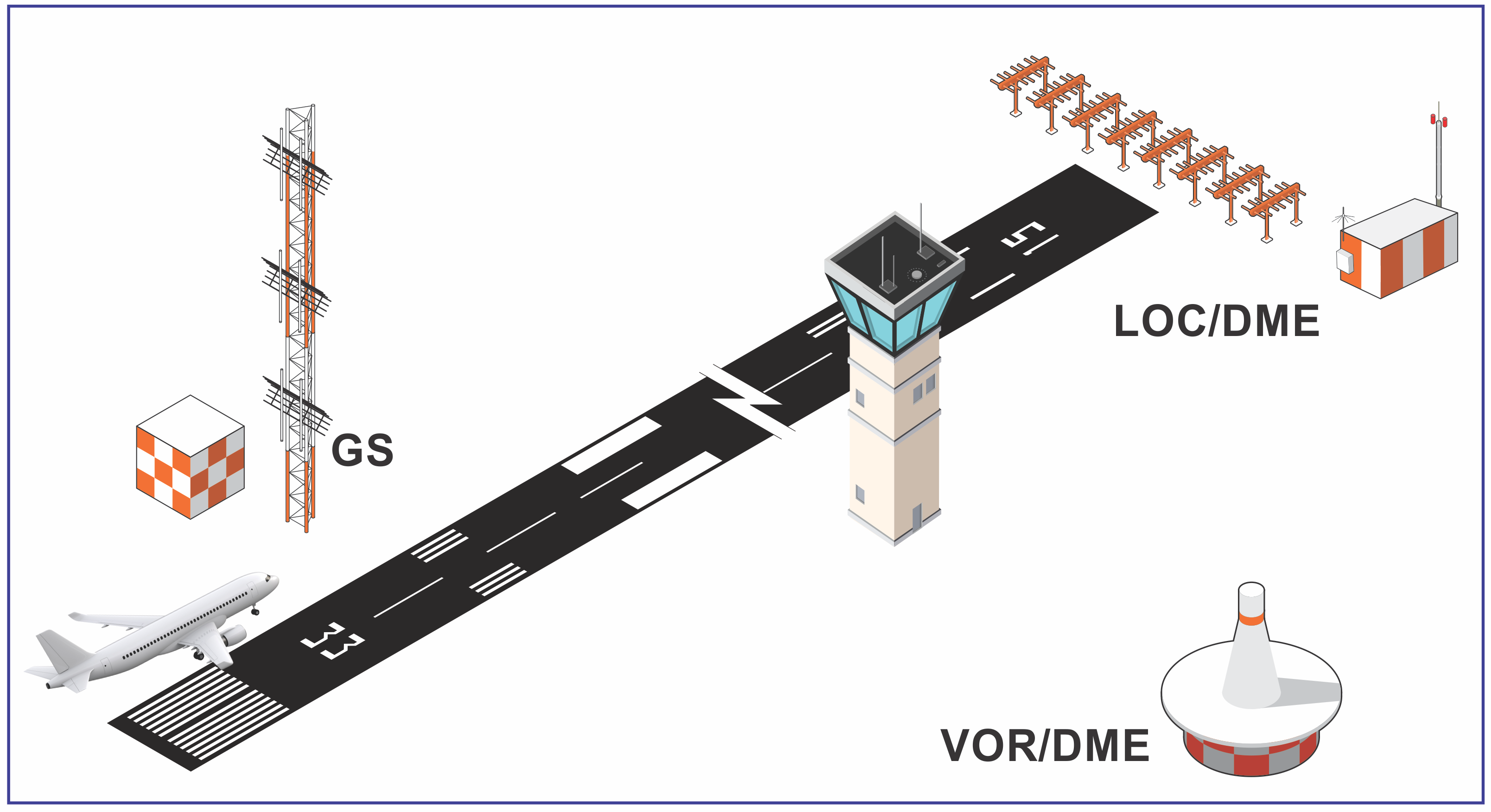
DME depends on two sides of the system working together. The aircraft needs airborne DME avionics, and the navigation facility on the ground needs a DME transponder. The aircraft sends the interrogation, and the ground station sends the reply. The FAA also notes that DME operates in the 960–1215 MHz band.
That is why DME is better understood as a navigation system rather than a single cockpit button. It is an aircraft-and-ground-station relationship. Pilots select the appropriate station, the system processes the signal exchange, and the distance is displayed in nautical miles. In practical flying, that makes DME a working part of the navigation setup rather than just a theory topic.
When pilots learn to use DME
Pilots usually start hearing about DME once their training moves beyond very basic flying and into navigation and instrument concepts. A student pilot may hear the term earlier, but the system becomes much more important when training shifts to radio navigation, procedures, and instrument awareness. That is because DME is most useful when a pilot is learning to navigate using ground-based aids and to interpret distance as part of a procedure rather than just as an abstract number.
This is why a page like runway information can support the journey around this topic, but the more direct fit is the Instrument Rating money page. DME becomes much more valuable once a pilot is flying by reference to instruments, using procedures, and understanding how navigation aids support route and approach awareness. In other words, pilots do not learn DME just to memorise a definition. They learn it because instrument flying demands precise distance awareness.
Why instrument training makes DME more useful

Instrument training is when DME starts to make more operational sense. A pilot flying under instrument conditions may need to know the distance to a station to identify a fix, confirm progress on an approach, or back up situational awareness. The FAA’s AIM explains that DME provides distance only, which is why it often works best as part of a broader radio navigation setup rather than as a stand-alone solution.
That is the practical shift students need to understand. DME is not “important because it is on the exam.” It is important because it provides a pilot with a real-time distance reference, supporting safer and more accurate instrument flying. That makes it a serious training topic rather than just another aviation acronym.
What DME is used for in real flying
DME is mainly used to help pilots determine their distance from a selected navigation station. That sounds simple, but it becomes very useful in practice. Distance information can support route awareness, help identify fixes, confirm progress during instrument procedures, and reduce guesswork when visibility or external references are limited. FAA material and SKYbrary both describe DME as a distance-based aid that supports a pilot’s position awareness relative to a beacon or facility.
In day-to-day terms, DME helps answer practical questions that matter in flight. It can help a pilot track how close they are to a station, understand where they are within a procedure, and keep a more precise picture of the flight rather than relying on rough estimates. That is why DME remains useful even in a cockpit full of other instruments.
Common uses of DME
-
Measuring distance to a selected navigation station
-
Supporting instrument procedures and published fixes
-
Improving situational awareness during en-route flying
-
Helping a pilot confirm progress along a route or approach
These uses matter because distance is one of the easiest ways to improve navigational clarity. If the pilot knows the course and also knows the distance, the flight picture becomes much easier to manage. That is the real operational value of DME.
DME compared with other navigation aids
DME is easiest to understand when it is compared with what it does not do. It does not provide a heading on its own, and it does not replace all other navigation aids in the cockpit. Instead, it solves one specific navigation problem very well: distance. The FAA says there is no azimuth information in DME, only distance.
That is why DME often appears with other aids. A VOR can provide course guidance, while DME provides range. A localizer can provide lateral guidance, while DME can provide distance information for that procedure. The system becomes more powerful when pilots understand that each instrument or aid contributes a different piece of the overall navigation picture.
Simple comparison table
|
Aid / System |
Main job |
What it provides to the pilot |
|---|---|---|
|
DME |
Distance measurement |
Nautical-mile distance to a station |
|
VOR |
Course guidance |
Radial / bearing information |
|
Localizer |
Lateral approach guidance |
Runway-aligned course guidance |
|
DME + another aid |
Combined use |
Distance plus directional/procedural context |
This is the cleanest way to frame it: DME is not trying to do everything. It is trying to do one thing accurately enough to support better navigation decisions.
Why is DME Still Important?
Even though aviation navigation has evolved, DME remains operationally useful because of its distance awareness. The FAA continues to describe DME as part of the radio-navigation infrastructure and notes its role in measuring slant range between the aircraft and facility.
For students and aspiring instrument pilots, the bigger lesson is simple. DME matters because it teaches you not to think of navigation as a single instrument or system. Good navigation comes from understanding what each aid does, what it does not do, and how it fits into the wider picture. That is exactly why DME deserves more than a thin definition. It is a practical piece of aviation navigation, and once you understand how it works, much of instrument flying starts to make more sense.