Are Runways Just A Long Strip Of Pavement?
No, A runway looks simple from a distance: a long strip of pavement where aircraft land and take off. But good Runway Information goes far beyond that first impression. A runway is a carefully marked, measured, and lit operating surface designed to tell pilots where to touch down, how much runway remains, where the usable landing area begins, and how to keep orientation in day, night, and poor weather conditions. The FAA’s Pilot’s Handbook describes a runway as a defined rectangular surface prepared for aircraft takeoffs and landings, and the FAA’s AIM details the visual markings and lighting systems that support those operations.
For anyone getting deeper into aviation, Runway Information becomes interesting because it sits at the intersection of aircraft performance, pilot judgement, weather, and airport design. A runway is not just pavement. It is a system of numbers, lights, markings, and spacing choices that give pilots a fast visual language they can read under pressure. That is why runway knowledge matters so much in real flying.
Why runway numbers look the way they do
Runway numbers are based on magnetic heading, rounded to the nearest ten degrees and shortened to two digits. So a runway aligned close to 90 degrees is marked 09, one near 180 degrees is marked 18, and one near 360 degrees is marked 36. FAA material explains that runway designations are determined from the magnetic azimuth of the runway centerline.
That is also why the opposite direction of the same runway is numbered 18. If one end is 09, the other end is 27. If parallel runways point in the same direction, they are separated with L, C, or R for left, centre, and right. This is one of the first pieces of Runway Information students learn because it immediately turns a painted number into a directional clue.
Before getting into markings, it helps to understand what the runway is physically made of and which parts matter most to a pilot.
What a runway actually consists of
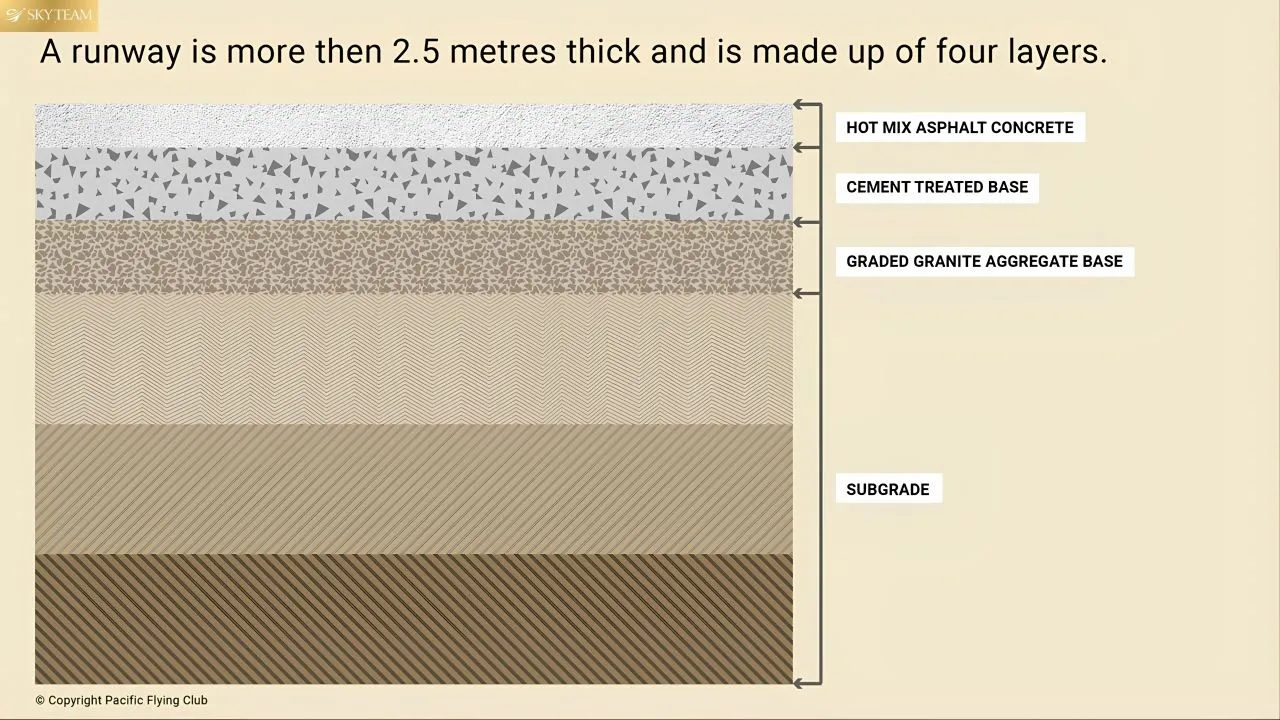
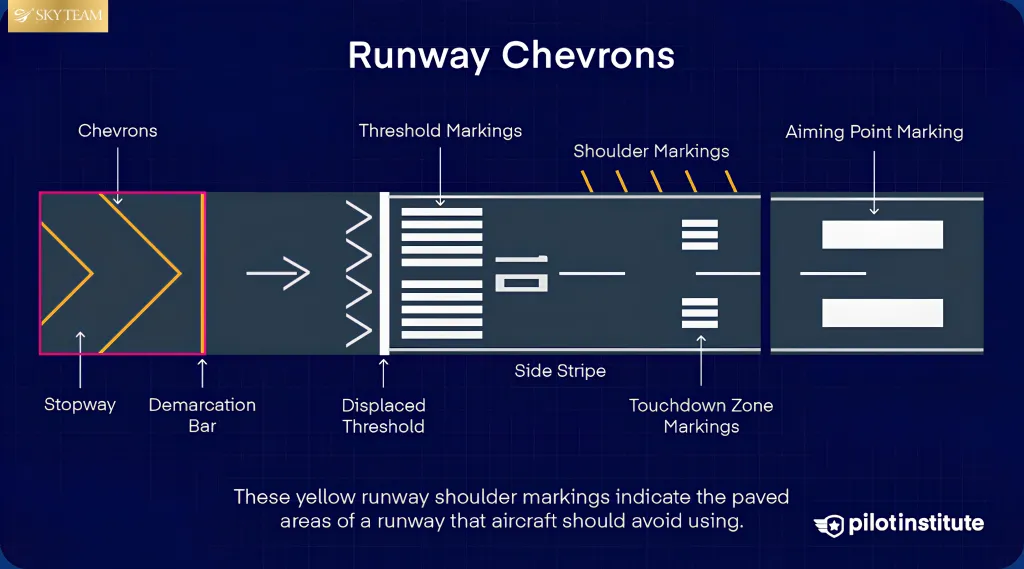
A runway is more than its surface material. Yes, many runways are asphalt, concrete, or a mix of both, but what matters to a pilot is the usable landing area, the threshold, the centerline, the touchdown zone, and the lighting and signage that support safe operation. FAA runway-marking guidance in the Pilot’s Handbook breaks these visual elements down because each one conveys a different message to the pilot during approach, touchdown, rollout, and departure.
Good Runway Information starts with knowing that the runway is both a physical structure and a visual system. The threshold tells you where the landing portion begins. The centerline keeps alignment clear. The aiming point helps a pilot judge where to aim on approach. Touchdown zone markings add distance awareness. Once you see it that way, a runway stops looking like paint and starts looking like a language.
The parts of a runway that a pilot reads most often
|
Runway feature |
What it is |
Why it matters |
|---|---|---|
|
Threshold |
The beginning of the runway is available for landing |
Tells pilots where the landing use begins |
|
Runway designation |
Large runway numbers |
Shows magnetic runway direction |
|
Centerline markings |
White stripes down the middle |
Helps maintain alignment |
|
Aiming point markings |
Broad white rectangles |
Gives a visual touchdown target |
|
Touchdown zone markings |
Bars in pairs past the threshold |
Gives distance references after crossing the threshold |
|
Edge lights |
Lights along runway edges |
Defines runway width and usable path at night |
|
Centerline lights |
Lights are down the centre on some runways |
Helps with alignment in low visibility |
|
REILs |
Flashing lights at the runway approach end |
Helps identify the runway entrance |
That table gives the quick map. The more interesting part is what each marking and light is trying to tell the pilot during a real approach.
Where does the usable runway really begin?
The threshold is one of the most important pieces of Runway Information because it marks the beginning of the runway available for landing. FAA guidance states that threshold markings identify the beginning of the runway available for landing and notes that, in some cases, the landing threshold may be relocated or displaced.
That matters because a pilot cannot assume every visible stretch of pavement is available for touchdown. Some runways have displaced thresholds, meaning part of the pavement before the threshold may be available for taxiing, takeoff, or rollout, but not for touchdown from that direction. This is the kind of detail that makes runway knowledge more than trivia. It affects where a pilot aims, when they flare, and how they judge available landing distance.
What the threshold tells a pilot immediately
-
Where landing use starts
-
Whether part of the pavement may be displaced or relocated
-
Where the approach judgment should begin to tighten up
After the threshold, the next big visual cue is the aiming point, which many people notice without knowing what it is called.
Why are those big white blocks painted on the runway?
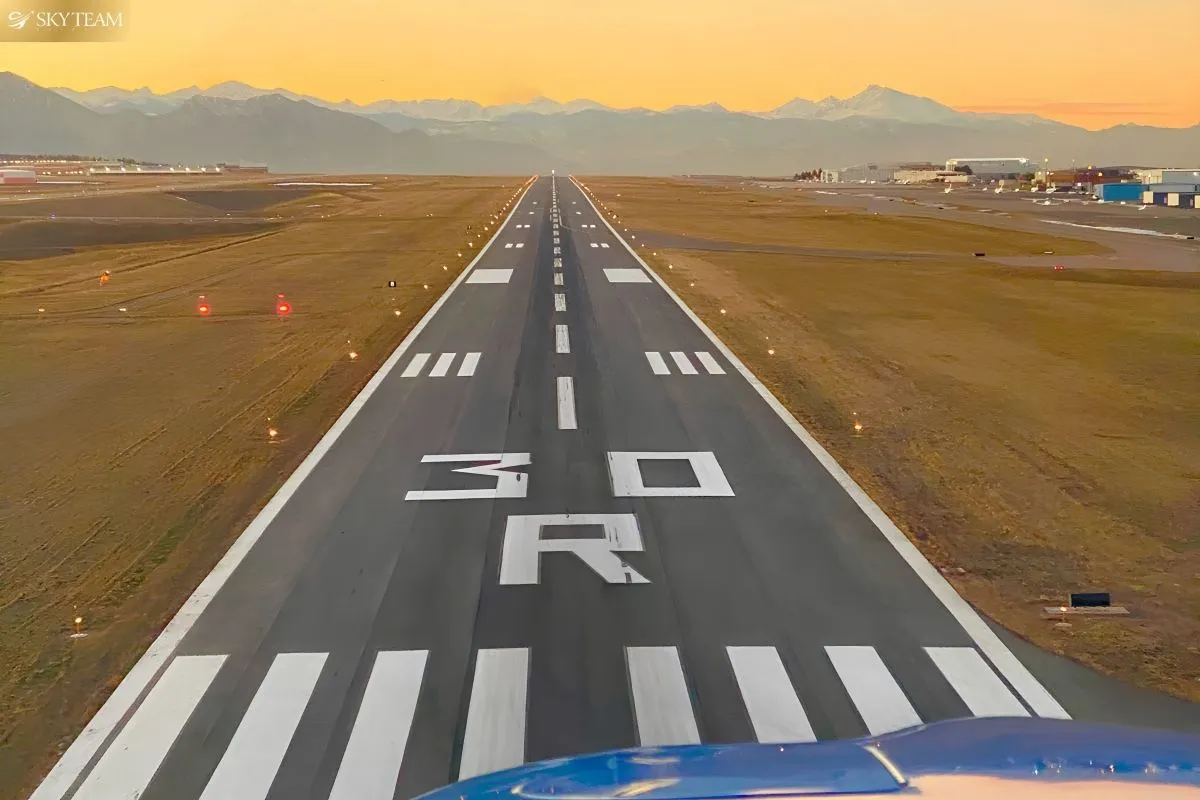
The aiming point marking is there to give pilots a clear visual target during landing. FAA guidance says the aiming point marking consists of two rectangular white bars placed on each side of the runway centerline about 1,000 feet from the landing threshold.
This is one of the most practical pieces of Runway Information because it helps the pilot judge whether the approach is stable and whether the aircraft is likely to touch down in a safe area. It is easy to underestimate how much visual discipline a landing requires, especially in changing weather or unfamiliar airports. The aiming point gives the pilot a fixed place to work toward rather than relying only on instinct.
What the aiming point helps the pilot do
-
Judge whether the approach is too high or too low
-
Aim for a consistent touchdown area
-
Improve landing stability and repeatability
Just beyond that, the touchdown zone markings provide the pilot with another kind of information: distance.
How do pilots know where the touchdown area really is?
Touchdown zone markings identify the touchdown zone for landing and are coded to provide distance information in 500-foot increments. FAA guidance explains that these markings are arranged in pairs around the centerline and that certain pairs are omitted near the midpoint if the runway is marked from both ends.
This makes touchdown zone markings one of the more interesting parts of Runway Information because they are doing two jobs at once. They visually reinforce where touchdown should occur, and they quietly give the pilot a sense of how far down the runway the aircraft has travelled. A pilot who understands them is reading more than paint. They are reading at a distance.
What touchdown zone markings help with
-
Confirming the intended touchdown area
-
Estimating distance from the threshold
-
Supporting more accurate landing judgement
Once the markings are understood, the next major layer is lighting, especially for night or low-visibility operations.
What do runway lights really tell you at night?
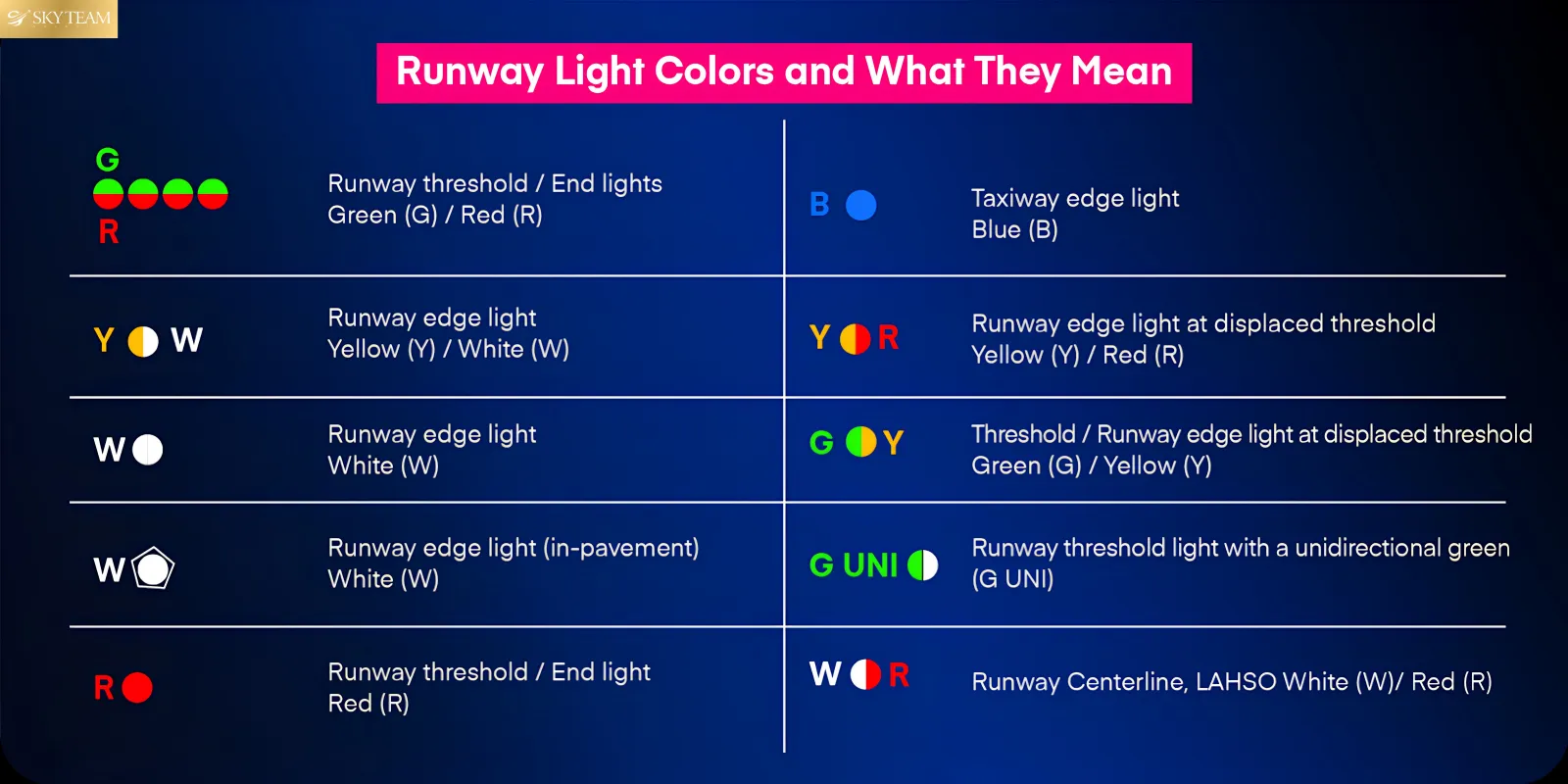
Runway lighting is there to make the runway usable when markings are harder to read or visibility is reduced. FAA’s AIM explains that Runway End Identifier Lights, runway edge lights, centerline lights, and touchdown zone lights each serve different purposes, from identifying the runway approach end to showing the runway centerline and caution zones near the runway end.
This is where Runway Information starts to feel more technical in a good way. At night, lights replace some of the clarity daylight usually provides. Pilots read color changes, spacing, and lighting layout to understand alignment, remaining runway, and approach precision. The lighting is not decorative. It is operational.
What the main runway lights are telling the pilot
-
REILs: flashing white lights marking the runway approach end
-
Runway edge lights: white lights along the sides, changing to yellow in the last 2,000 feet or half the runway length on instrument runways
-
Runway centerline lights: white, then alternating red/white, then all red as runway end approaches
-
Touchdown zone lights: steady white bars extending from 100 feet beyond threshold to 3,000 feet or midpoint, whichever is less
That lighting logic becomes even more important when the weather reduces what the pilot can see outside.
Why runway details matter more in fog and cloud
Runway systems become more important as visibility gets worse. In clear weather, the pilot can more easily combine runway cues with external visual references. In fog, haze, rain, or cloud-related low visibility, the runway itself becomes a much more critical source of guidance. That is why fog and cloud cover belong naturally near this topic. The more visibility drops, the more runway identification, threshold recognition, light patterns, and stable alignment start to matter.
This also connects with flight instruments, because a pilot landing in reduced visibility is constantly balancing instrument references with visual runway cues. Good Runway Information is not only about knowing names. It is about knowing what to trust and when to transition between instrument guidance and outside visual references.
Why does this matter to a student pilot early
-
Reduced visibility makes runway cues more valuable
-
A pilot has less time to interpret markings if the runway appears late
-
Instrument awareness and runway awareness have to work together
That is one reason runway knowledge becomes more interesting as training deepens. It stops being airport trivia and starts becoming operational thinking.
Where does DME fit into runway awareness?
DME does not describe the runway surface itself, but it can still support runway-related situational awareness, especially during instrument procedures that rely on distance from a station or fix. That is why DME in aviation fits here when the conversation shifts from the physical runway to how pilots determine their position relative to an approach path or facility.
In that sense, Runway Information is broader than just paint and lights. It also includes the systems and references that help a pilot arrive at the runway in a controlled, predictable way. That is especially true in instrument flying, where distance, heading, and runway environment cues all come together near the end of the approach.
What DME can add near runway operations
-
Better distance awareness on some instrument procedures
-
Help identify fixes before reaching the runway environment
-
Support for a more controlled approach to picture
For pilots starting out, though, the runway itself is still the most visual and immediate lesson.
Why runway knowledge matters before advanced training
A student pilot does not need to fly a jet to benefit from strong runway knowledge. Runways are part of almost every flight, and understanding them early builds better habits in taxiing, takeoff briefing, approach planning, and landing judgment. That is why Runway Information belongs close to the beginning of aviation learning, not only later in advanced operations.
This also helps explain why a Private Pilot License (PPL) is such an important first step. Long before someone thinks about flying on an airline, they need to become comfortable reading the runway environment, understanding markings and numbers, and treating the runway as a structured operating surface rather than just “the place where you land.”
The first runway lessons that stay with a pilot
-
Read the runway number and direction correctly
-
Recognise where landing use begins
-
Use aiming point and touchdown zone cues properly
Those habits remain useful throughout more advanced aviation training.
Conclusion
Good Runway Information is really about learning how a runway communicates with the pilot. The threshold shows where landing use begins. The numbers show direction. The aiming point and touchdown zone markings support approach and landing judgment. The lights take over when daylight and visibility are no longer enough. FAA guidance lays out these systems in detail because they are central to safe airport operations.
For anyone interested in aviation, this is one of the more intriguing parts of flight training because it turns something that looks simple into something highly structured. A runway is not only a strip of pavement. It is a visual system designed to be read quickly and correctly, even under pressure. That is why understanding Runway Information makes a pilot more prepared from the very start.