July 2026 · 6 min read · Sky Team Aviation Academy
Before you start flight training, it helps to understand how the types of pilot licenses fit together: what separates a Private Pilot License (PPL) from a Commercial Pilot License (CPL) and an Airline Transport Pilot License (ATPL), and why you can’t start at the top. This guide explains each license, what it lets you do, the correct order to earn them, and which one you actually need for a flying career.
This guide covers manned civil pilot licenses (aeroplanes). It does not cover drone, UAV or remote-pilot certificates, which are a separate category with their own rules.
What PPL, CPL and ATPL mean: licenses build up in stages
- •PPL (Private Pilot License): fly for your own private purposes, not for pay. Everyone’s starting point.
- •CPL (Commercial Pilot License): lets you work as a pilot for pay.
- •ATPL (Airline Transport Pilot License): the highest license, and the qualification to command airliners as captain.
- •Each level adds flight hours, exams, and a higher medical class, and builds on the one below it.
What are the types of pilot licenses, and why are they tiered?
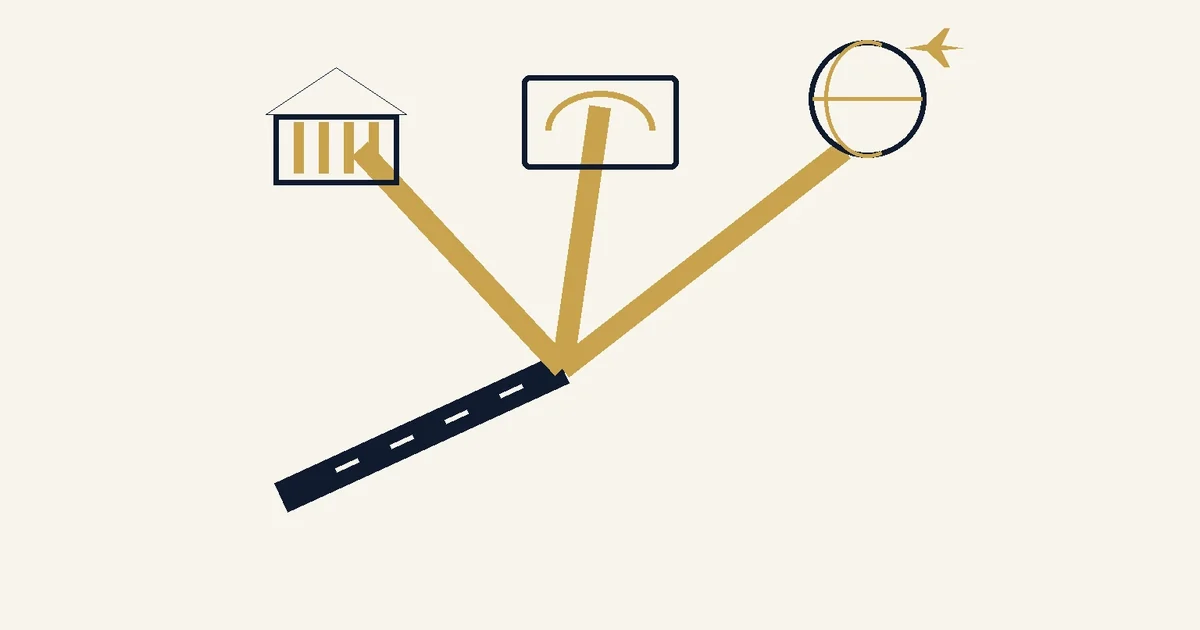
Pilot licenses are official certificates defining what you may fly and under what conditions. They are tiered because flying is learned through experience: you start with the fundamentals, add skills (night, instrument, multi-engine), then accumulate the hours and experience that qualify you to fly commercially and, eventually, to command airliners. Between the PPL and the CPL come the ratings: night, instrument (IR) and multi-engine (MER). These are add-ons that widen what you are allowed to do.
Private Pilot License (PPL)
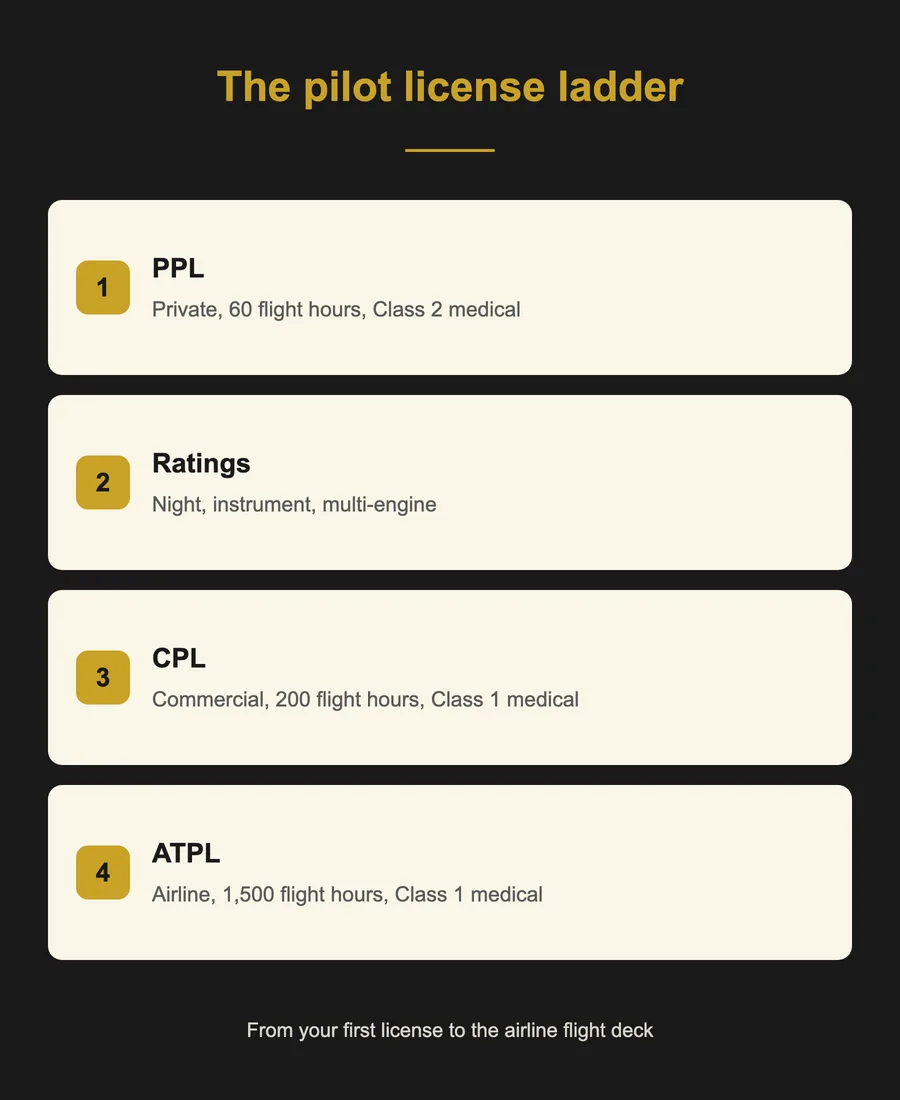
Every pilot’s starting point. It lets you fly for your own private purposes (not for pay). On the Sky Team programme it requires 8 theory subjects, 60 total flight hours (45 dual with an instructor + 15 solo), 8 written exams plus a practical flight test, and a Class 2 medical. It is open to applicants from age 17. See the Private Pilot License page for the full programme.
Commercial Pilot License (CPL)
This is the license that lets you work as a pilot for pay. It builds on the PPL and ratings and needs more experience: 200 total flight hours (including at least 100 hours as pilot-in-command, 20 hours instrument, and 10 hours multi-engine), 8 written exams and a practical check, and a higher Class 1 medical. The minimum age is set by the civil aviation authority that issues your license, so confirm it when you apply. See the Commercial Pilot License page.
Airline Transport Pilot License (ATPL)
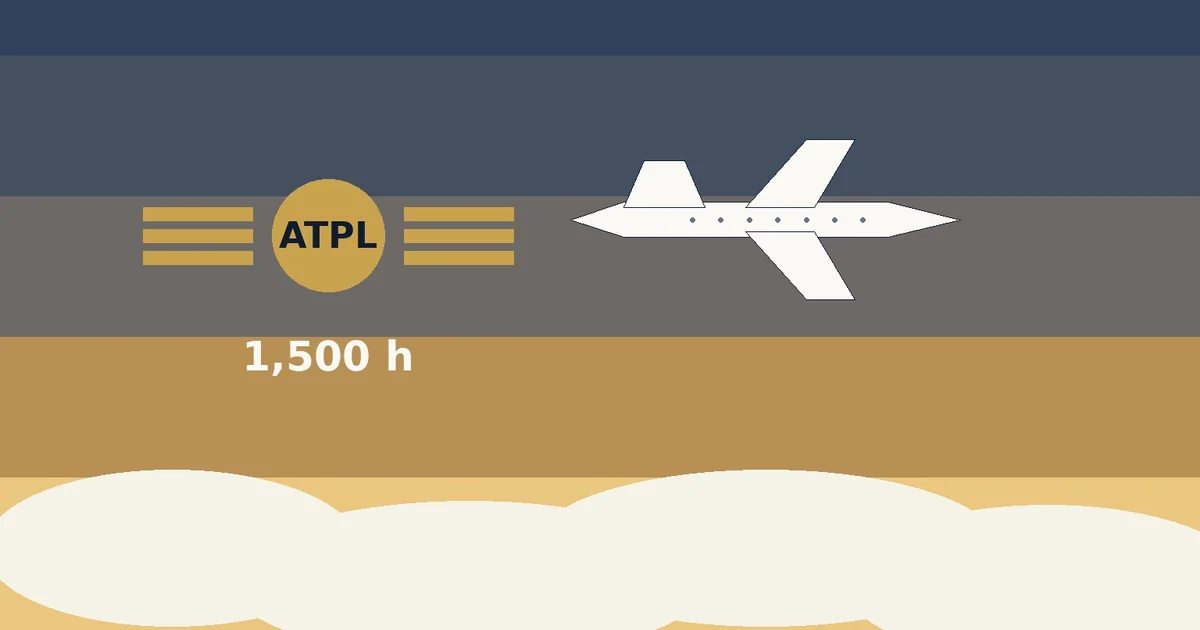
This is the highest license in civil aviation, and the qualification to work as an airline captain. It requires substantial experience: 1500 total flight hours to the ICAO standard (including pilot-in-command, night, and cross-country time), 6 written exams, and a Class 1 medical. It is completed as hours accumulate, subject to the minimum age set by the civil aviation authority. See the Airline Transport Pilot License page.
The difference between PPL, CPL and ATPL in one line
How long does it take to get each license?
Timelines depend on how often you fly, but as a guide: a PPL takes about 6 months. The ratings that follow (night, instrument, multi-engine) add a few weeks each. Reaching a CPL, the license you need to fly for pay, takes roughly 12 to 18 months in total from your first lesson, because it includes every stage below it. The ATPL is then completed as you build experience toward its 1,500 flight hours, so it is measured by hours flown rather than by a fixed course length. The timeline for each license is on its course page, linked above.
Which license do you need for a career?
If your goal is flying as a hobby, a PPL is enough. If you want to be paid to fly, your destination is the CPL, and as hours accumulate, you progress to the ATPL to fly as captain. You cannot jump straight to a CPL or ATPL; both build on the PPL and the ratings. Costs differ by the license you target, and the full breakdown is in our cost of becoming a pilot guide.
Medical class by license
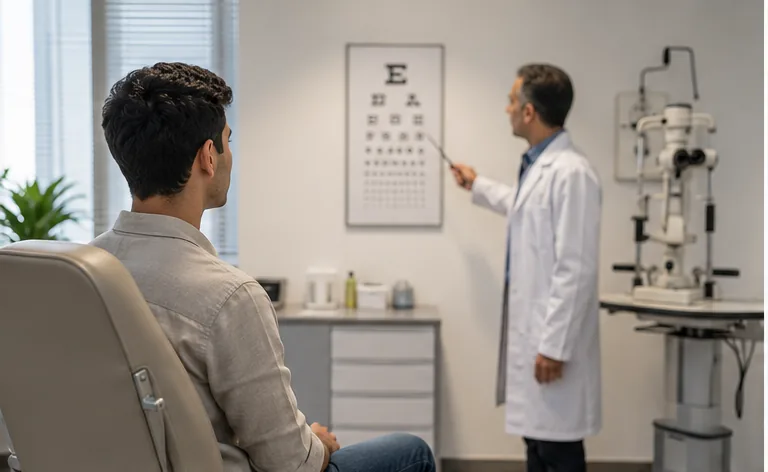
The PPL and night rating require a Class 2 medical, while everything from the instrument rating up to the CPL and ATPL requires the higher Class 1. Exact standards are set by the civil aviation authority and vary by license class, so confirm your own case with a designated aviation medical examiner (AME). See the eyesight rules and the full exam in our pilot medical exam guide.
Frequently asked questions about pilot licenses
What is the difference between PPL, CPL and ATPL?
A PPL is for private flying (not for pay), a CPL lets you fly for pay, and an ATPL is the highest license, qualifying you to command airliners. Each level adds hours, exams, and a higher medical class.
How do I get a pilot license, and what are the requirements?
Start with a PPL, add the night, instrument and multi-engine ratings, then earn a CPL to fly for pay and build toward an ATPL. Each license has its own flight hours, written exams, medical class and minimum age. For the full step-by-step route, including eligibility, the medical and where you train, see our how to become a pilot in Egypt guide.
What is a Private Pilot License (PPL)?
It is the first license, letting you fly for private purposes without pay. It requires 8 theory subjects, 60 flight hours, 8 written exams plus a practical test, and a Class 2 medical. It is open to applicants from age 17.
When do I need a Commercial Pilot License (CPL)?
When you want to be paid to fly. It requires 200 flight hours, written exams and a practical check, and a Class 1 medical, and it builds on the PPL and ratings.
What is an ATPL and when do I get it?
It is the highest license, qualifying you to fly as an airline captain. It requires 1500 flight hours, 6 written exams and a Class 1 medical, and is completed as experience accumulates after the CPL.
What is the correct order to earn the licenses?
PPL first, then the ratings (night, instrument, multi-engine), then the CPL, and finally the ATPL as hours accumulate. Each step builds on the one before it.
How long does each license take?
About 6 months for a PPL, plus a few weeks for each of the ratings that follow. Reaching a CPL takes roughly 12 to 18 months in total, because it includes the PPL and the ratings below it. The ATPL is then built up as you accumulate flight hours toward 1,500. For the whole journey end to end, see our how to become a pilot in Egypt guide.
Is there a separate co-pilot (first officer) license?
No. First officers fly on the same licenses as captains: a CPL to begin an airline career, then the ATPL. The two roles differ in seniority and who is in command, not in the license itself. See our guide on the difference between a captain and a co-pilot.
Can I start directly with a commercial license?
No. The commercial license builds on the PPL and ratings, so the path always begins with the PPL and progresses upward.
Talk to our admissions team to map your path from PPL to your career goal.