September 2026 · 7 min read · Sky Team Aviation Academy
A search for “flight schools for international students” looks like a single question, but it is really three decisions in sequence: where you train, under which civil aviation authority your licence is issued, and what you need after graduating in order to work in your market. And most people who choose wrongly do not get the school itself wrong; they get the order of these three questions wrong. This page does not recommend any school by name and does not quote another school’s fees, because any figure or condition that we cannot attribute to a published official source, with the date we read it, is not written here at all. What you will find instead: the structure of the three routes as it is, a table showing where the value lies in each route, and a list of questions that shows you which school is serious within a single phone call.
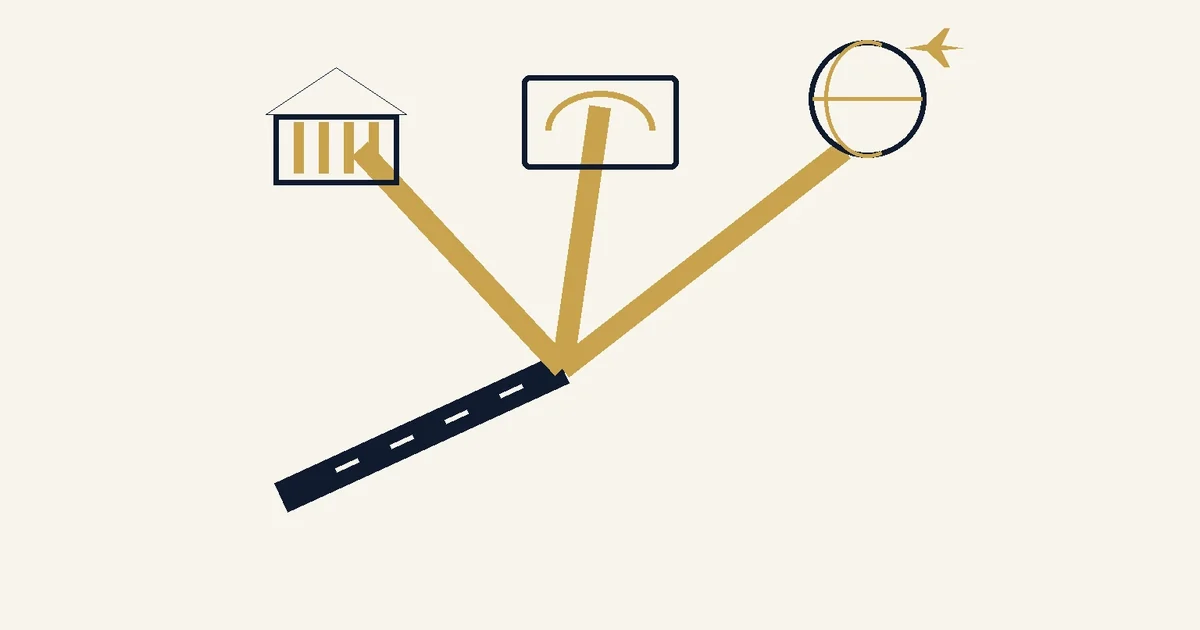
An international student has three routes: a state academy, a private academy in their own country, or training abroad and then converting the licence
- •State academy: a training body owned or sponsored by the state, subject to the civil aviation authority of its country and issuing a local licence, and admission to it is governed by the conditions of the owning body itself.
- •Private academy in your own country: a training organisation approved by the same authority but privately owned, so the training is at your own expense and the licence is local straight away, with no visa and no relocation.
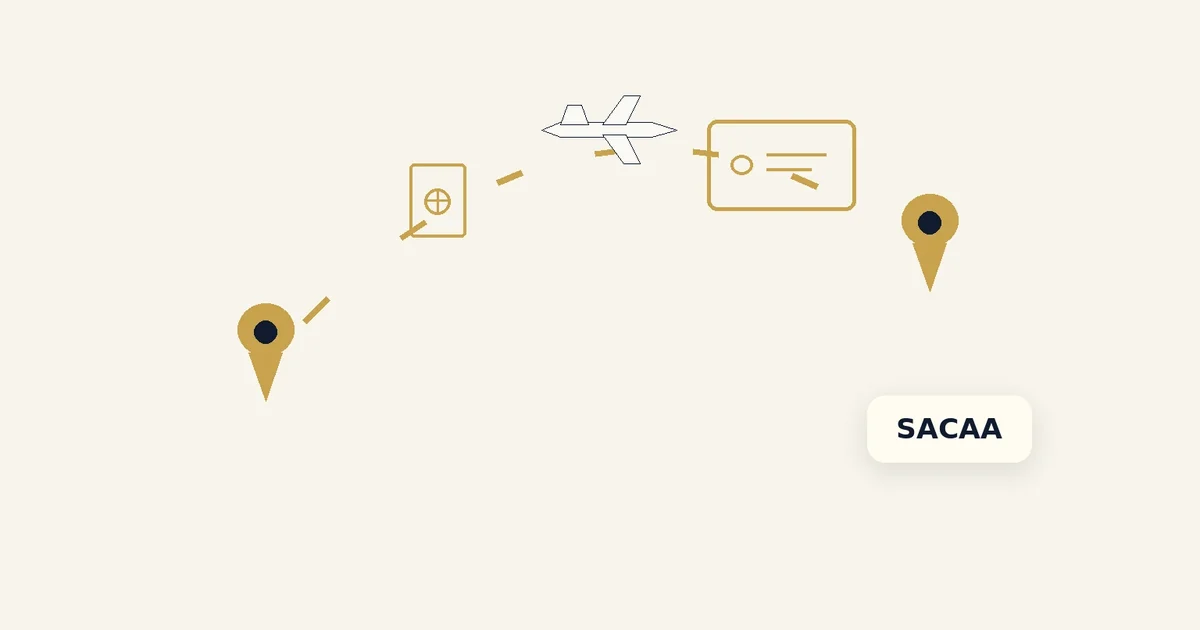
- •Training abroad: the licence is issued under the authority of the country of training, so you need a visa and residence, and after graduating you need your licence to be accepted or converted by your own country’s authority. This is the Sky Team route, through South Africa.
- •The value is not in the name of the school but in four things you ask about before paying: accreditation, actual flight hours, fleet readiness, and what is needed to convert the licence in your country.
Three routes to studying aviation for an international student
The three routes open to an international student are a state academy in their own country, a private academy in their own country, or training abroad and then converting the licence on return. The essential difference between them is not price alone, but the body that issues the licence, how available flight hours really are rather than on paper, and what you need after graduating to work in your market.
The state academy: a training body owned or sponsored by the state, issuing a local licence under the civil aviation authority of its country. Three things decide whether it is right for you, and they can only be taken from the body’s own official announcement, with its date: whether admission is open to non-citizens of that state at all, whether the training is funded or at the student’s expense, and how many seats the current intake announces.
The private academy in your own country: a training organisation approved by the same authority but privately owned. Its advantage is that you stay close to your family and train under the authority you will work under, so there is no conversion and no visa. Ask there about its accreditation number with the authority, the number of aircraft operating today, and the waiting time between one stage and the next. We set out the comparison of routes within the Kingdom in studying aviation in Saudi Arabia.
Training abroad: you choose a destination with aircraft, runways and weather that allows flying all year round, so you finish the route in one continuous period instead of having your stages broken up. In return, you deal with a student visa, accommodation and medical insurance, and your licence is issued under the authority of the country of training, so the conversion question becomes one you ask before travelling, not after returning.
Note that all three routes pass through the same sequence: a private pilot licence, then the night, instrument and multi-engine additions, then the commercial licence. What differs is the body that issues the licence, how long you wait until you get it, and what you need after it to work in your market.
Comparison table: where does the value lie?
The value of the state route lies in funding, if it is available, and its places are limited; the value of a private academy in your own country lies in proximity, day-to-day follow-up and a licence that needs no conversion; and the value of training abroad lies in the availability of flight hours and finishing the route in one continuous period. The following table compares the structure of the three routes, not specific schools.
The table compares the structure of the routes, not specific schools. Any figure or condition specific to a particular school (fees, seats, nationality conditions) is read from the school’s official website or from the authority’s register, with the date it was read.
Why don’t you find school names and their fee figures here? Because our writing rules do not allow us to quote a figure or condition about another school without a published official source and the date it was read. Lists of approved training organisations change, fees change faster still, and a page that quotes an old figure harms its reader more than it helps them. Read the official list yourself from your country’s civil aviation authority register before any commitment. We tried to read the register of Saudi Arabia’s General Authority of Civil Aviation ourselves on 18 and on 23 September 2026, and its website did not respond to our connection from outside the Kingdom, so we do not list here names we have taken from others.
Does free flight training exist?
No private flight academy trains for free. Free flight training does exist, but it does not come from the school; it comes from a body that pays for you: a government scholarship programme, a cadet programme announced by an airline that binds you to it with an employment contract, or a military route in which the state bears the cost in return for service. Any page that promises “free aviation study” without naming the body that pays is talking about one of these three, or about nothing.
This matters to the international student more than to anyone else: most scholarship programmes and cadet programmes are restricted to citizens of the state that funds them, so the expatriate student finds these programmes closed to them even if they have read about them. That is why the right question is not “Where can I study for free?” but “Who is entitled to apply to this particular programme, and what does the graduate commit to after it?” The answer is in the programme’s own announcement, not in an article that rounds up programmes.
And where there is no funding, the real difference between the routes remains what you get in return for what you pay: actual flight hours, a recognised civil aviation authority, and a licence that is accepted where you intend to work. These are the six questions that follow.
What should you ask about before enrolling?
Six questions reveal any flight school within a single phone call: who accredits it and what its accreditation number is, how many actual flight hours the programme has and how they are distributed, how many aircraft are operating and how many students there are per instructor, what English level and medical examination are required, what is needed to convert the licence in your country, and what the amount includes. Ask for the answers in writing.
- Who accredits the school, and what is the accreditation number? The acceptable answer is the name of a civil aviation authority and an accreditation number you can verify, not the phrase “internationally accredited”. Sky Team’s training, for example, takes place in South Africa under the South African Civil Aviation Authority (SACAA).
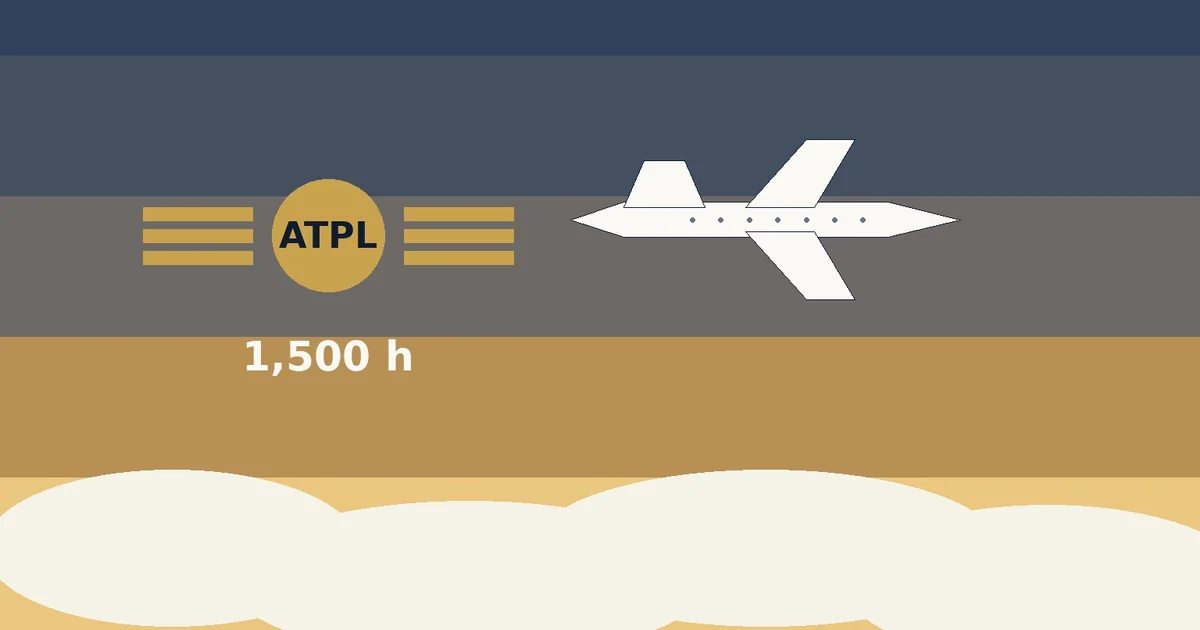
- How many actual flight hours, and how are they distributed? A good answer itemises rather than summarises: the private pilot licence (PPL) in the Sky Team programme is 60 hours in total, of which 45 hours are dual training with an instructor and 15 hours are solo flight. The commercial licence (CPL) is 200 hours in total, inclusive, of which at least 100 hours are solo flight as pilot in command, 100 hours dual, 10 hours on multi-engine aircraft, and 20 hours of actual instrument flight. Watch out for a common trap: the total is a figure that includes the earlier stages, not a figure to be added on top of them.
- How many aircraft are operating, and how many students per instructor? The fleet is what turns the schedule from paper into hours in your logbook. Ask for a number, not a description: the number of aircraft airworthy today, the number of instructors, and the average wait between one stage and the next. Any programme that is good on paper stalls if there are fewer aircraft than students.
- What English level, and what medical examination, are required? The published standard at Sky Team is English proficiency of at least level 4 under the standards of the International Civil Aviation Organization (ICAO), and anyone below that level is provided with a language course before travel and study. As for the medical examination, its class and requirements vary by licence and by authority, and it is confirmed with the civil aviation authority or with an approved aviation medical examiner (AME) before any financial commitment, not after it.
- What is needed to convert the licence in my country? This question is asked before enrolling, not after graduating. The conditions for accepting or converting a foreign licence vary by licence and by issuing body, and are confirmed with the authority directly. And ask for the answer to three specific points in writing: is your licence accepted by conversion, or is an exam required? Which exams or checks are required, if any? And does the foreign licence have a validity period for conversion after it is issued?
- What does the amount include, and what does it not include? Ask for a written list that itemises flight hours, books and theory materials, exam fees, the medical examination, accommodation, the visa, and the cost of retaking a test after a fail. The school that answers this question with a list is the school that actually knows its costs.
The one rule that sums up all six: start from the end, not from the beginning. First ask what the civil aviation authority in the country where you intend to work accepts, then choose the school that gets you to that acceptance. Everyone who started from the school’s brochure and ended at the conversion question paid the price twice.
And two signs that end the conversation, whatever the other answers:
- A guaranteed job, or a guarantee of finishing the programme within a set period. No school is in a position to guarantee you employment, or to guarantee how long it takes to graduate: the duration moves with the weather, the availability of aircraft and instructors, test dates and your own pace. “Your licence in thirty days” is not an offer; it is assumptions left unstated.
- A demand for the full amount upfront, or a refusal to document the terms in writing. Payment in stages tied to the stages of training is the normal arrangement, and any essential term that is not written into the contract does not exist.
Studying in South Africa: how this route works in practice
On the Sky Team route, the student trains at the training base we work with in South Africa under the South African Civil Aviation Authority (SACAA) up to the commercial licence: 200 flight hours in total and 19 theory subjects up to the CPL, over a cumulative period of 12 to 18 months from the first day, and the admissions team handles the procedures with the student until travel. We have set out the reasons for choosing this destination specifically in studying in South Africa, and the details of each licence separately in the course pages.
The entry requirements are published and deliberately simple: age 17 to 30 at the time of applying, and a pass in secondary school with no required percentage or cumulative GPA and no SAT or ACT tests, and no particular secondary-school stream is required. International certificates such as IGCSE, the American Diploma and the International Baccalaureate (IB) are also accepted, as is any four-year bachelor’s degree. If your certificate is from the Gulf, ask the admissions team about its equivalence before applying.
After the application is accepted, the admissions team accompanies the student through the pre-travel steps: the medical examination, English level placement, handover of the full uniform, medical insurance in South Africa that covers hospital treatment without payment from the student, and then obtaining the visa from the embassy. The details and timing of each step are taken from the admissions team when you apply, not from this page.
The published cost of the Sky Team route: 46,000 USD for the training programme, and 2,000 USD admission and registration fee. What the amount includes and does not include, and the payment method, are set out in the cost of studying aviation guide.
Frequently asked questions about choosing a flight school for international students
How do I choose between an academy in my own country and studying abroad?
Start from the market you want to work in and ask its authority which licences it accepts, then compare the two routes on three numbers only: how many months to the commercial licence, how many actual flight hours you will get, and what remains for you to do after graduating. The route that is fastest on paper is not always the fastest if it ends with you waiting for a conversion you did not ask about early on.
How long does study take up to the commercial licence?
In the Sky Team programme, from 12 to 18 months cumulatively from the student pilot licence to the commercial licence, with a total of 200 inclusive flight hours and 19 theory subjects. The actual duration is affected by the student’s readiness, their language level and how the exams go, so it is read as a range, not as a promise.
Is a specific secondary-school percentage required for admission?
No. The requirement at Sky Team is only that the student has passed secondary school, with no set percentage and no cumulative GPA; SAT or ACT tests are not required, and no particular secondary-school stream is required. If your certificate is from the Gulf, ask the admissions team about its equivalence before applying.
Is a licence issued abroad converted in my country?
It depends on the licence, the body that issued it and the body that will accept it, and there is no single answer that fits every case. The right way is to ask the civil aviation authority in your country about its requirements before travelling, and to keep the reply in writing. We do not state a specific requirement here because it changes, and stating an outdated condition is worse than not stating one.
What level of English is required of an international student?
What is required is English proficiency of at least level 4 under the standards of the International Civil Aviation Organization (ICAO), because the theory lectures and radio communications are all in English. Anyone below this level when applying is provided with a language course before travel and study, so language is a reason for delay, not a reason for rejection.
How much does study cost for an international student at Sky Team?
The published cost is 46,000 USD for the training programme, plus 2,000 USD admission and registration fee. The details of what the amount includes and the payment method belong in the fees guide linked above, which is the only reference we update whenever anything changes.
Have you settled on the route that suits you?
Send your details so that the admissions team can review your certificate and your language level, and explain the next step and its timeline to you before any commitment.