July 2026 · 15 min read · Sky Team Aviation Academy
The question “How to be a successful pilot” is not only about learning how to control an aircraft. It is about building the mindset, discipline, and habits that allow you to operate safely and improve over time. Technical knowledge matters, but it is not enough on its own. A strong pilot also needs good judgment, clear communication, emotional control, and the willingness to keep learning.
Aviation success is also built on disciplined decision-making, not just technical skill. The FAA’s Risk Management Handbook explains that effective risk management is one of the most important skills a pilot can learn and practice, which is exactly why focus, judgment, and preparation matter so much from the earliest stages of training.
Whether you are a student pilot just starting out or someone already moving through flight training, the same principle applies: success in aviation is built step by step. The strongest pilots are not always the most naturally talented. They are usually the ones who stay focused, train seriously, and keep improving even after they become comfortable.
So you want to be a pilot. This guide covers both halves of that journey: the pilot skills and habits that make a pilot successful, and the full step by step path to becoming one. It answers what you need to be a pilot, how hard becoming a pilot really is, and what happens from checking your eligibility all the way to your first flying job.
How to be a successful pilot: the direct answer
- •A successful pilot combines knowledge, skill, awareness and professionalism. Talent is rarely the deciding factor. Habits are.
- •Three families of pilot skills matter: technical, mental and soft, and each one is trained differently.
- •Seven habits carry them: focus, verification, clear communication, earned confidence, calm, continuous learning and discipline.
- •The license path itself runs PPL to CPL to ATPL, with flight training conducted under South Africa’s SACAA on an ICAO compliant license.
Qualifications Of A Successful Pilot

Top 12 Airline Pilot Skills to Put on Your Resume
Qualifications means two different things on this page, and a successful pilot needs both of them. The first is the human side: the pilot skills and the habits that decide how well you fly, how accurately you communicate, and how safely you make decisions. The second is the formal side: the licenses, the medical certificate and the English standard that legally allow you to fly. The sections below cover the skills and the habits first, because they are what employers and instructors actually judge, then the license path in full.
What Makes a Successful Pilot?
A successful pilot combines knowledge, skill, awareness, and professionalism. Flying is one of those professions where small mistakes can have large consequences, which is why a pilot’s habits matter so much. Good pilots do not rely on confidence alone. They rely on preparation, discipline, and good decision-making.
Success in aviation starts before takeoff
A lot of people imagine pilot success as something that shows up in the air, but it actually starts much earlier. It starts with how a pilot prepares, studies, rests, checks details, and manages their mindset before even getting into the cockpit. That is one reason this topic matters so much: learning how to be a successful pilot is really about learning how to think and act properly before, during, and after every flight.
If you are still at the beginning of that path, remember that strong aviation habits usually start long before a pilot reaches advanced training, which is why the career building section further down this page matters as much as the license path itself.
The pilot skills you actually need: technical, mental and soft
Becoming a pilot takes more than a love of airplanes. It demands a blend of technical expertise, mental strength and the personal qualities that hold a crew together. The clearest way to look at pilot skills is to group them into three families, because each family is built in a different way and each one fails in a different way when it is neglected.
Technical pilot skills
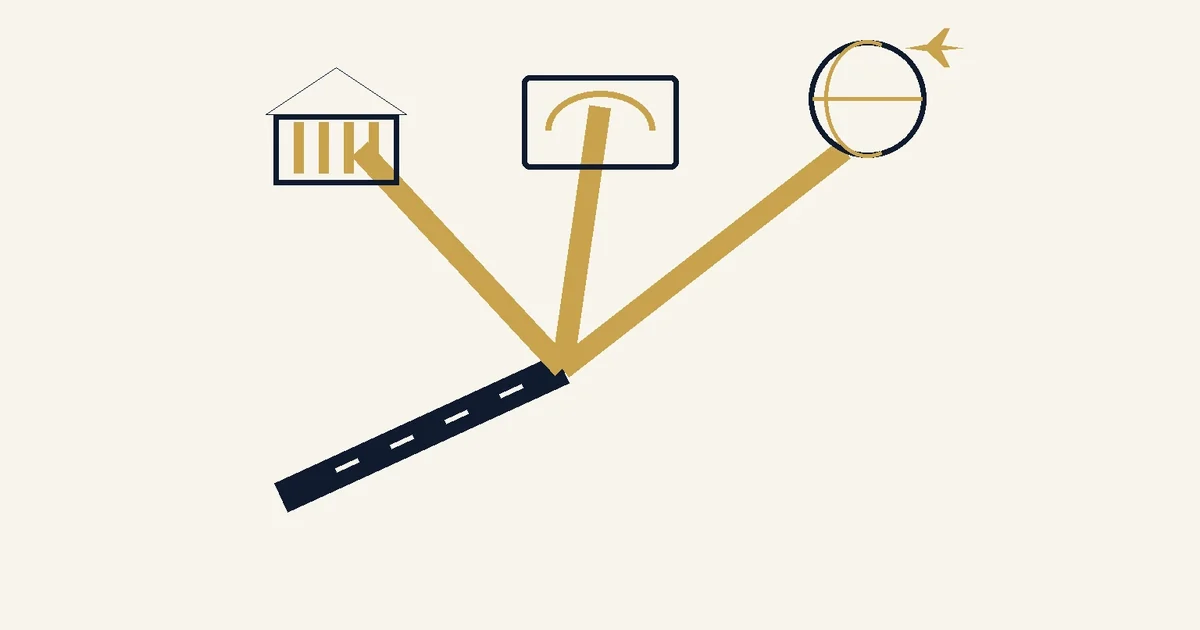
At the heart of any pilot’s skillset lies a deep understanding of the aircraft itself. From the mechanics of the flight controls to the systems that keep everything running smoothly, a pilot has to operate the airplane with precision and troubleshoot problems as they appear. These are the skills built through structured training: classroom theory first, then simulator work, then real hours in the aircraft. Four theory domains carry most of that load, and you will meet all four in ground school: aircraft handling, navigation, meteorology and radio communication.
Mental pilot skills: the mindset
Technical ability is only one piece of the puzzle. A pilot’s mental strength is just as important: remaining calm under pressure, making quick decisions, and thinking critically when the situation changes faster than the plan. Spatial awareness, the ability to visualize your position in three dimensions, is what keeps navigation precise and hazards at a safe distance. This is the group of pilot skills that separates a technically competent student from a pilot other people trust.
If you want practical routines to build alongside your training, read our guide to aviation pilot tips and tricks.
Soft pilot skills
Beyond the technical and the mental sides, a pilot’s personal qualities play a large role in their success. Excellent communication is essential for coordinating with air traffic control, crew members and passengers. Teamwork is just as important, because pilots work alongside co-pilots and other aviation professionals to keep every flight safe and efficient. Finally, a genuine passion for aviation and a commitment to continuous learning are what keep pilots improving across an entire career rather than only until the checkride is passed.
Habit 1: Focus
The simplest way to describe this habit is: turn on airplane mode. A pilot needs to mentally switch into flight mode before takeoff. Distractions, personal stress, and divided attention can quickly weaken performance.
Your mind has to be in the cockpit
Before a flight, a pilot should be mentally present and fully engaged. If your head is full of unrelated problems, frustration, or distraction, your performance can suffer. A successful pilot learns how to recognize that and take preparation seriously. Flying is not something to approach casually or half-focused.
Concentration is part of safety
This is not just about productivity. It is about safety. A distracted pilot is more likely to miss details, forget steps, or make weaker decisions. That is why successful pilots develop the habit of clearing their minds and locking in before the flight begins.
Habit 2: Knowledge Gap
One of the most important habits in aviation is refusing to guess. Good pilots do not pretend they know something when they do not. They check, confirm, and learn. That mindset prevents avoidable mistakes and helps build real confidence instead of fake confidence.
Never assume when you can verify
The rule is simple: pilots should never assume. If a procedure, weather detail, regulation, or aircraft system is unclear, the right move is to double-check it. In aviation, guessing is not professionalism. Verification is.
Strong pilots stay curious
A successful pilot treats every knowledge gap as something that needs to be closed, not ignored. This is one of the biggest differences between average pilots and strong ones. The better pilot is often the one who keeps asking, checking, and improving rather than acting like they already know enough.
Habit 3: Communicate Clearly
Clear communication is one of the most valuable skills a pilot can have. A pilot must communicate with instructors, other crew members, and air traffic control in a calm, precise, and easy-to-understand manner. Poor communication creates confusion, and confusion creates risk. It is also why the licensing system sets a language standard of its own, English at ICAO Level 4, which Step 3 of the path below explains.
Aviation depends on clarity
In flying, unclear communication can quickly lead to mistakes. That is why good pilots train themselves to speak clearly, listen carefully, and confirm information properly. It is not enough to “kind of understand” what was said. Strong communication means accuracy.
Professional communication builds trust
A pilot who communicates well also appears more professional, more reliable, and more in control. That matters in training and later in professional aviation. The cockpit is not a place for vague language or lazy listening.
Habit 4: Build Confidence
Self-confidence is important in aviation, but it has to be balanced. A pilot who lacks confidence may hesitate too much or second-guess every move. A pilot with too much ego may stop listening, stop learning, or ignore warning signs. Neither is safe.
Confidence comes from preparation
The best confidence in aviation is earned confidence. It comes from study, repetition, understanding, and good habits. That kind of confidence helps a pilot make decisions calmly without becoming reckless.
Ego makes pilots weaker, not stronger
This is where many people get it wrong. Some think being a strong pilot means acting overly certain all the time. It does not. A successful pilot can be confident and still humble enough to admit uncertainty, ask questions, and keep learning.
Habit 5: Stay Calm
One of the clearest signs of a strong pilot is the ability to stay composed when something goes wrong. Problems in aviation are handled best by pilots who can think clearly rather than panic. Calmness helps protect judgment.
Pressure is part of flying
Even when there is no emergency, flying naturally involves workload, timing, and responsibility. That means every pilot needs to build the habit of staying steady under pressure rather than letting stress take control.
Calm pilots solve problems better
When a pilot remains calm, they can process information more clearly, work through checklists more effectively, and make better decisions. That is why emotional control is not just a personality trait in aviation. It is part of performance. The pilots who succeed under pressure are rarely the loudest voices in the cockpit. They are the ones who keep working the problem.
Habit 6: Keep Learning
This is one of the biggest truths in aviation: no pilot is ever really finished learning. Training does not stop after the first license, and skills do not stay sharp without effort. The strongest pilots keep updating their knowledge and refining their habits.
Learning is part of being professional
Aviation changes. Procedures, systems, technologies, and best practices continue to evolve. A successful pilot understands that staying current is part of the job, not an optional extra.
Improvement should be ongoing
Whether it is reading more, studying procedures, reviewing safety information, or improving weak areas, continuous learning is one of the habits that separates serious pilots from casual ones. It is also what makes the ambition sustainable, which is the point behind living the flying dream as a long term career: the dream only holds up when it is backed by ongoing discipline and development.
Habit 7: Success Is Built Through Habits
Many aspiring pilots wait to “feel motivated” before they study harder or take their training more seriously. That is weak thinking. Aviation rewards habits far more than mood. A successful pilot builds routines that work even when they do not feel inspired.
Discipline matters more than excitement
Excitement can get someone interested in aviation, but discipline is what moves them forward. The pilots who improve the most are usually the ones who show up consistently, review their mistakes, and keep training seriously.
Small habits compound over time
Better preparation, better communication, more honest self-review, and more consistent study all build on each other. Over time, that creates a much stronger pilot than raw enthusiasm alone ever could.
Skills and habits still are not enough on their own. You cannot legally fly without the proper license, obtained through an authorized flight school, and that is exactly what the second half of this guide covers: the path from checking your eligibility to holding a professional license.
How to become a pilot: the five-step path
Becoming a pilot is far less mysterious than it looks. It is a mapped sequence that any eligible student can follow stage by stage. Applicants from Egypt and the Gulf begin the process at home and complete their flight training in South Africa under SACAA. Here is the whole picture, from eligibility, to the licenses, to the medical, to flight training, all the way to working professionally.
Check your eligibility
The basics are more accessible than most people expect: age between 17 and 30, a secondary certificate (or equivalent) with no minimum grade, English at B2 level (equivalent to ICAO Level 4), and passing a medical. There is no required stream and no required score. The path is fully open to both men and women. Step 2 explains the license ladder, and Step 3 covers the medical and the language test in full.
Understand the license ladder
Your journey begins with the Private Pilot License (PPL), where you learn the fundamentals of flight, master basic aircraft operations, and build the confidence to fly solo. Training at this stage is both theoretical and practical, covering aircraft handling, navigation, meteorology and communication. From there you add the ratings, including night flying and the Instrument Rating, which teaches instrument flight procedures, navigation and weather analysis so you can fly safely in low visibility, plus the multi-engine rating. You then climb to the Commercial Pilot License (CPL) to fly for pay, and finally the Airline Transport Pilot License (ATPL) to command an airliner.
| License | Total flight hours | Typical duration | Medical class |
|---|---|---|---|
| Private Pilot License (PPL) | 60 hours total (45 dual + 15 solo) | Around 6 months | Class 2 |
| Commercial Pilot License (CPL) | 200 hours total, inclusive of every stage below it | 12 to 18 months cumulative | Class 1 |
| Airline Transport Pilot License (ATPL) | 1,500 hours total | Additional time to build the hours | Class 1 |
The totals above are inclusive, not additive. A commercial license does not sit on top of a separate 200 hours; the 200 already contains the private license hours and the ratings that came before it. The night, instrument and multi-engine ratings sit between the PPL and the CPL and are counted inside that same total.
Pass the medical and English test
The medical is essential: free of chronic disease and color blindness, with eyesight and hearing checked. Exact standards are set by the civil aviation authority and vary by license class, so confirm your own case with a designated aviation medical examiner (AME). As a general rule, a Private Pilot License is issued against a Class 2 medical, while commercial and airline transport licenses require a Class 1. See the eyesight rules and the full exam in our pilot medical exam guide. On the language side, applicants below the required English level receive a language course before travel.
Start your flight training
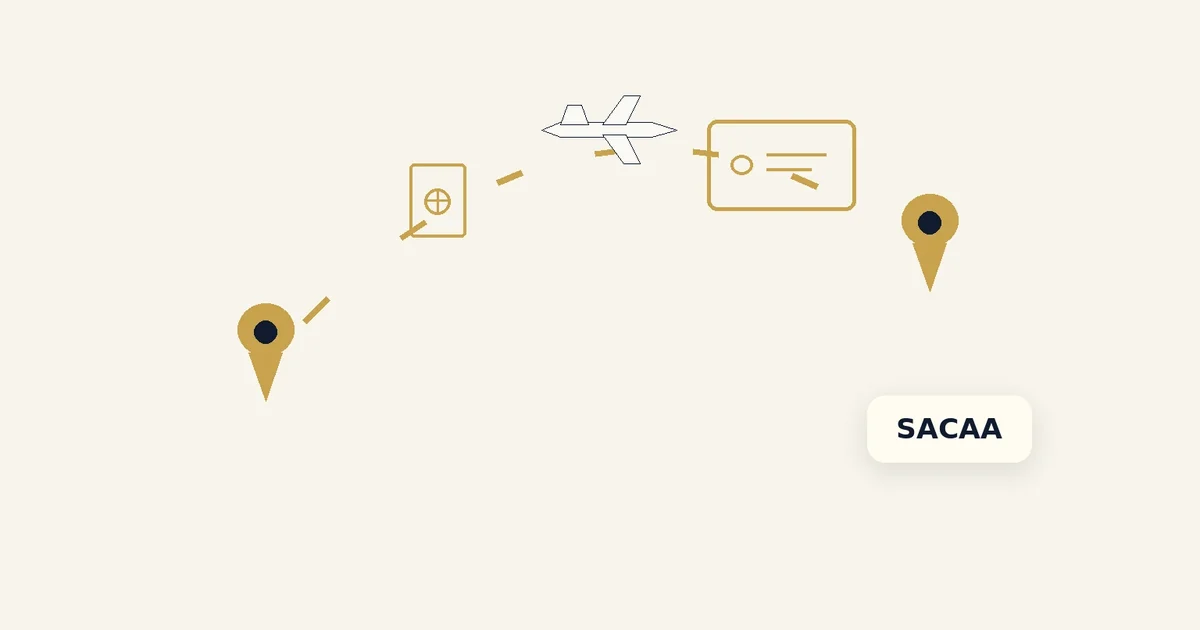
Flight training is conducted under South Africa’s Civil Aviation Authority (SACAA), with clear skies and intensive flight hours, on a license built to ICAO standards and recognized internationally. Why South Africa specifically? The answer is in our study aviation in South Africa guide. The academy arranges travel, insurance, and the visa, and accompanies the student at every step.
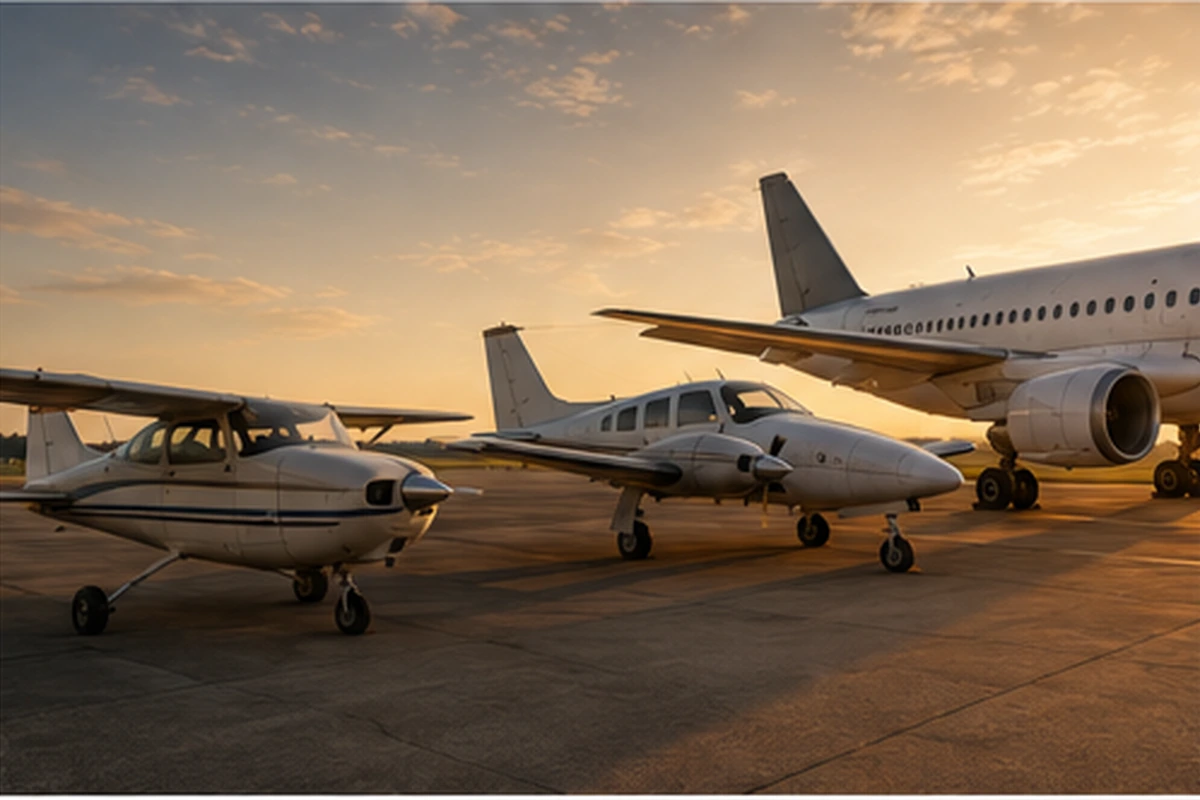
Training on the program is flown on light aircraft you will recognize from flight schools worldwide: the Cessna 172, the Piper PA-28, the Beechcraft Baron 55 and the Diamond DA42. Ground school covers the theory, the simulator lets you rehearse procedures in a controlled environment, and the aircraft is where the skills become real.
Work as a pilot and progress
After the commercial license, your career begins as a first officer, then progresses to captain as hours and experience accumulate, with responsibilities and seniority growing at each rank. Your goal from day one is a license built to ICAO standards, which is what the SACAA route issues; converting or validating it with your own authority is a separate step we walk you through. How is a pilot’s pay actually structured? See our pilot salary guide.
What about the cost? It varies by the license you target, and the full, up-to-date breakdown is in our cost of becoming a pilot guide.
After the license: building your aviation career
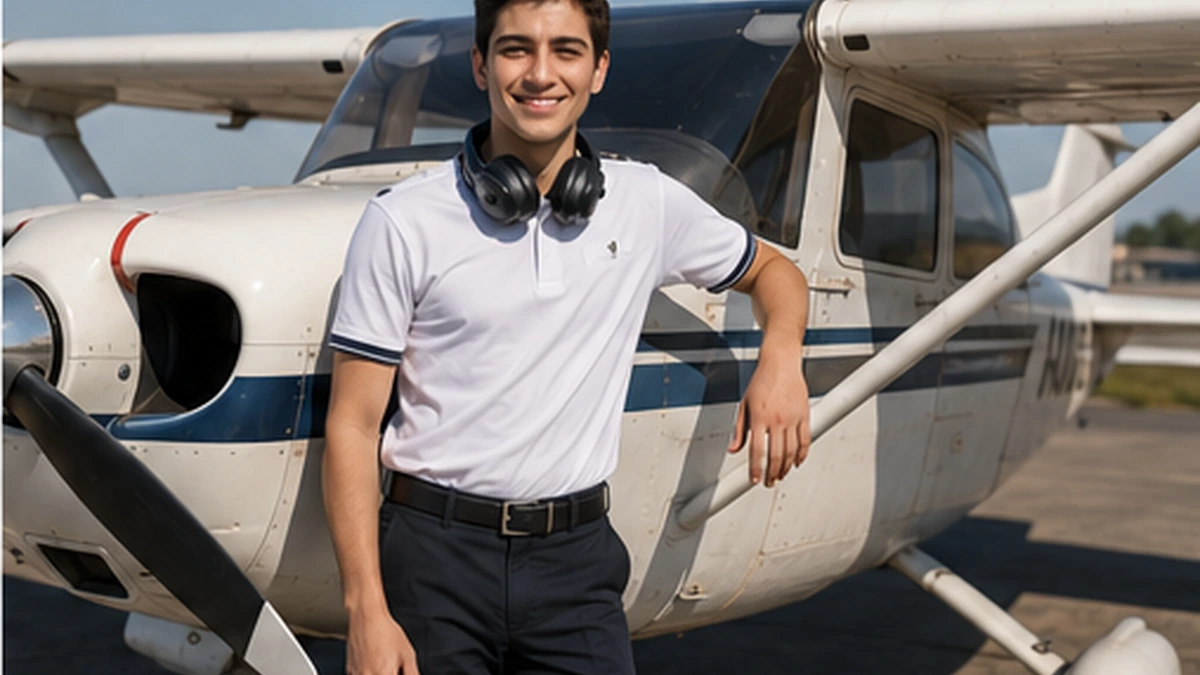
Holding a license is the start of a career, not the end of the training. Before you finish, it pays to understand the pathways open to you, because they are genuinely different jobs: airline pilot, flight instructor, or a role in aviation management. Knowing which one you are aiming at changes the ratings you prioritize and the hours you chase.
Build flight experience and accumulate hours
Flight experience is the currency of an aviation career. Seek out every legitimate opportunity to accumulate hours, through flight schools, aviation clubs, or by qualifying as a flight instructor, which remains one of the most common and most respected hour building routes precisely because teaching forces you to master what you thought you already knew. Hands-on experience is what turns a licensed pilot into an employable one.
Obtain licenses and ratings in sequence
To fly professionally you need the licenses and ratings in the right order: private license, then the instrument and multi-engine ratings, then the commercial license. Research the specific requirements for each one with your own authority and work steadily to meet them rather than trying to shortcut the sequence.
Network within the aviation industry
Networking plays a real role in this industry. Attend aviation conferences, job fairs and industry events to meet professionals and hear about openings before they are advertised. Join aviation organizations and engage with serious online aviation communities to widen your network and to keep a realistic picture of what employers are looking for. The AOPA guide to flying for a career is a useful outside view of the same ground.
Prepare for interviews, assessments and simulator evaluations
As you progress you will face interviews, aptitude assessments and simulator evaluations. Prepare for them the same way you prepare for a flight: research the common questions, rehearse simulator scenarios, and stay current on industry practice and regulation. This is one of the places where the habits in the first half of this guide pay off directly, because assessors are watching how you handle pressure at least as closely as they watch your handling of the aircraft.
Stay current on technology, safety and regulation
Aviation is a field that keeps moving. Stay up to date on advances in aviation technology, on safety protocols, and on regulatory change. That habit demonstrates the commitment to continuous learning and professional development that separates a pilot who holds a license from a pilot who holds a career.
Where the routes lead
Aviation offers a genuinely wide spread of roles for licensed pilots. Some fly for commercial airlines, others join private charter operators. Cargo flying and aerial survey work are established routes, and so are aerial photography and flight instruction. Each one values a different mix of the skills covered earlier on this page, which is another reason to build all three families rather than only the technical one.
How These Habits Support a Professional Pilot Path
These qualities are not only useful for student pilots. They are the same habits that help someone progress into commercial aviation later. The difference is that at the commercial stage, the standards become higher and the consequences become more serious.
Early habits shape later success
A pilot who learns focus, communication, discipline, and calm decision-making early is building the right foundation for future professional flying. That is why this topic links naturally to a Commercial Pilot License (CPL), 200 hours, because professional progression depends on much more than flight hours alone.
Good pilots are built, not born
That is the real message behind this article. Very few people begin as naturally complete pilots. Most successful pilots become successful because they train properly, stay honest about weaknesses, and keep improving over time.
Frequently asked questions
What makes a successful pilot?
A successful pilot combines knowledge, skill, awareness and professionalism. In practice that shows up as seven habits: focus before every flight, refusing to guess and verifying instead, clear communication, confidence earned through preparation rather than ego, staying calm under pressure, continuous learning after the first license, and discipline that works even without motivation.
What do you need to be a pilot, and what skills does it take?
Three families of pilot skills, the pilot competencies every training syllabus is built around. Technical skills: understanding the aircraft, the flight controls and its systems, operating with precision and troubleshooting problems. Mental skills: staying calm under pressure, quick decision-making, critical thinking, and spatial awareness, the ability to visualize your position in three dimensions. Soft skills: communication with air traffic control, crew and passengers, teamwork with co-pilots and other aviation professionals, plus genuine passion and a commitment to continuous learning.
How do I become a pilot?
In five steps: check your eligibility (age, secondary certificate, medical, English), understand the license ladder, pass the medical and language test, complete flight training, then work as a pilot and progress from first officer to captain.
How long does it take to become a pilot?
It depends on your goal: a Private Pilot License takes around 6 months, and the path to a commercial license is typically 12 to 18 months, roughly one to one and a half years, with experience hours accumulating after that.
How hard is it to become a pilot?
Is becoming a pilot hard? It is demanding but achievable: the real challenge is commitment and consistent study, not exceptional talent or top grades. The path is broken into clear, graded stages, each with its own training and skill test, so you build ability step by step rather than all at once. Meet the eligibility basics and the rest is structured for you.
How many flight hours do you need to become a pilot?
It depends on the license. A Private Pilot License is around 60 flight hours total (45 dual and 15 solo), a Commercial Pilot License about 200 flight hours total, inclusive of everything below it, and an Airline Transport Pilot License around 1,500 hours total. See how the hours break down on our Commercial Pilot License course page.
Do I need top grades to become a pilot?
No. There is no minimum grade requirement; a passing secondary certificate is enough. What matters is passing the medical and having the required English level.
Do I need to speak English?
Yes. Aviation runs entirely in English. The required level is B2 (equivalent to ICAO Level 4), and applicants below it receive an English course before travel.
Can women become pilots?
Yes, on exactly the same path and conditions, with no additional requirements. Aviation is fully open to both men and women.
Where does the flight training take place?
Flight training takes place in South Africa under the Civil Aviation Authority (SACAA), leading to an ICAO-compliant license. The academy arranges travel, insurance, and the visa.
Conclusion
Learning how to be a successful pilot is not about one secret formula. It is about developing the right combination of focus, knowledge, communication, confidence, calmness, and continuous learning. These are the habits that help pilots operate safely and grow stronger with experience.
For aspiring pilots, success starts early. It starts with how seriously you take your training, how honestly you address your weaknesses, and how committed you are to improving. The pilots who last and progress are usually not the ones chasing shortcuts. They are the ones building the right habits from the beginning.
Your path to the cockpit starts with one step
Talk to our admissions team and map your personal path today.