Discover the essential skills every aspiring pilot needs to succeed in their aviation career. The Most Important Skills for Aspiring Pilots. Starting with communication to problem-solving, we explore the top 10 skills that will set you on the path to becoming a successful pilot.
Introduction:
Becoming a pilot requires more than just flying skills.Skills for Aspiring Pilots must build will demands a diverse range of abilities and qualities that contribute to a pilot’s success in the dynamic aviation industry.
Whether you dream of flying commercial airliners, operating private jets, or pursuing other exciting aviation avenues, mastering these top 10 must-have skills will help you excel in your pilot training and future career. Join us as we delve into the essential skills every aspiring pilot should possess.
For many future pilots, building the right skills starts long before entering the cockpit. It begins with understanding the training path, the industry expectations, and the mindset required to grow in aviation. If someone is still at the beginning of that journey, it helps to first understand how to kickstart their aviation career and what steps can move them from interest to action.
Aspiring pilots often focus only on flight time or technical knowledge, but career progress also depends on discipline, consistency, communication, and the ability to adapt under pressure. The aviation field rewards people who prepare early, learn continuously, and take their development seriously from day one. Before exploring the top skills every pilot should build, it is important to recognise that success in aviation is not accidental. It is built through training, awareness, and a clear understanding of what the profession demands. Starting with the right foundation gives aspiring pilots a much stronger chance of succeeding in both training and their long-term aviation careers.
10 Skills for aspiring pilots
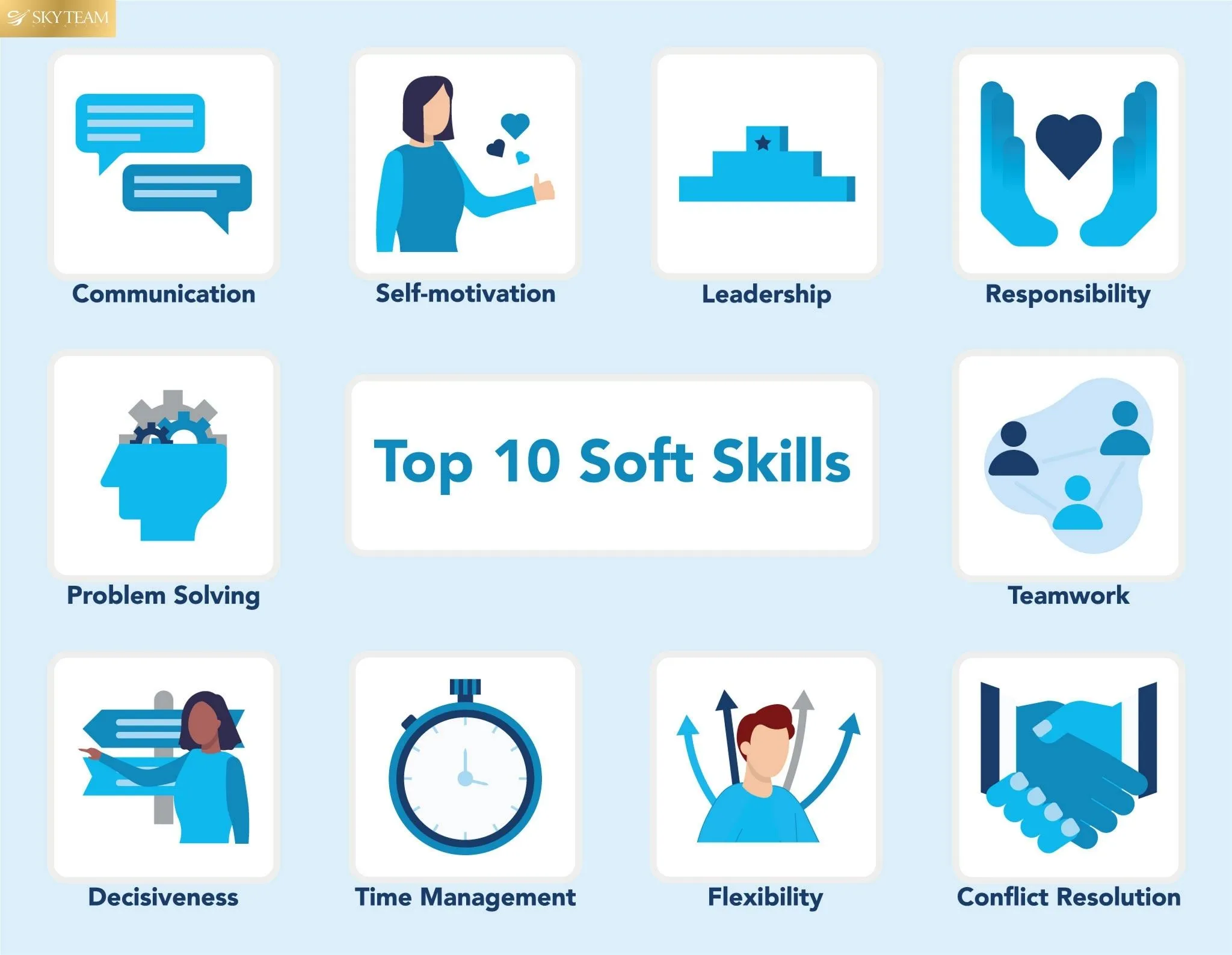
Effective Communication
Communication is one of the most important pillars of safe and professional flight operations. Pilots are expected to communicate clearly with air traffic controllers, instructors, cabin crew, ground staff, and sometimes passengers, all while managing workload and maintaining situational awareness. Miscommunication in aviation does not just create confusion, it can create operational risk. That is why understanding the importance of communication in aviation
The ability to convey information clearly and listen attentively is crucial for effective pilot communication with air traffic control, fellow crew members, and passengers. Discover the art of concise and precise communication in the fast-paced aviation environment.
Situational Awareness
Develop heightened situational awareness to anticipate potential challenges, assess risks, and make informed decisions while flying. Learn to observe, process, and respond to critical information in real-time.
Problem-Solving
Pilots encounter unexpected situations and must think quickly and logically to find solutions. Explore problem-solving techniques and decision-making strategies for handling emergencies and ensuring safe outcomes.
Teamwork and Leadership
Collaborative skills are essential for pilots who often work in a team environment. Learn how to effectively communicate, delegate, and inspire confidence among crew members, fostering a cohesive and efficient team.
Adaptability and Flexibility
The aviation industry is dynamic and ever-changing. Develop the ability to adapt to varying conditions, schedules, and environments. Discover how to remain flexible while maintaining a high level of professionalism.
Attention to Detail
Precision and attention to detail are vital in aviation. Explore the significance of thorough pre-flight checks, accurate documentation, and meticulous adherence to standard operating procedures.
Analytical Thinking
Pilots must analyze complex information, interpret data, and make critical decisions based on limited time and resources. Hone your analytical thinking skills to enhance your ability to assess flight situations and navigate challenges.
Stress Management
Flying can be demanding and stressful. Learn effective stress management techniques to maintain focus, clarity, and composure during high-pressure situations, ensuring optimal performance and safety.
Customer Service
For pilots engaged in passenger operations, excellent customer service skills are essential. Discover how to provide a positive passenger experience, ensuring comfort, safety, and clear communication.
Continuous Learning
Aviation is a field of constant learning and improvement. Embrace a growth mindset and commit to ongoing education, staying up to date with the latest industry trends, technological advancements, and regulatory changes.
Thus, enrolling in a recognised Commercial Pilot License (CPL) program helps students develop many of the qualities discussed in this article, including communication, decision-making, discipline, situational awareness, and professionalism. A CPL course is not only about learning how to operate an aircraft. It is about building the habits, standards, and mindset required to work in aviation at a professional level.
Conclusion
To become a successful pilot, you must possess a diverse range of skills beyond flying expertise. Effective communication, situational awareness, problem-solving abilities, teamwork, and adaptability are just a few of the essential skills that will set you apart in the aviation industry. By mastering these top 10 skills, you’ll be on the path to becoming a skilled, confident, and sought-after pilot. Embark on your journey today, and let these skills propel you towards a rewarding aviation career.