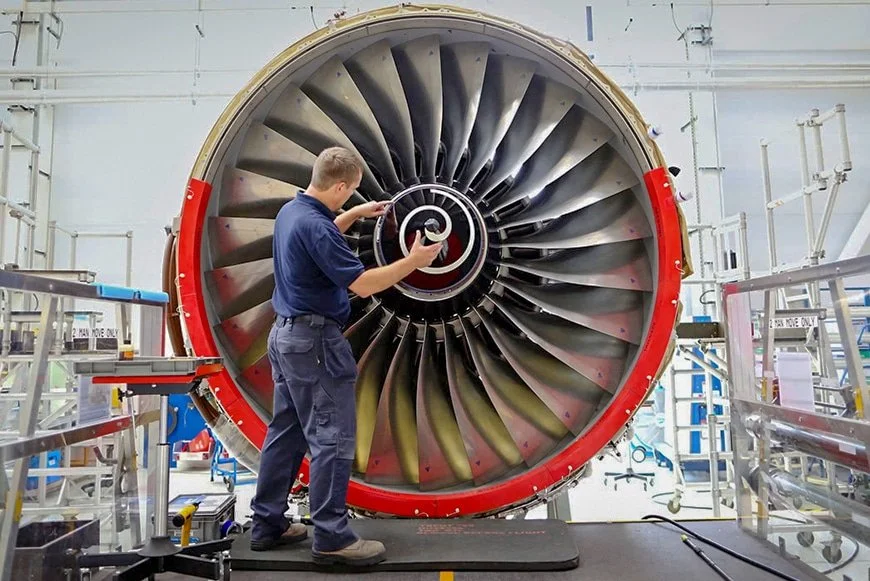
Aircraft Engines: The Main Types, Their Pros and Cons, and Who Builds Them
Understanding Aircraft Engines is one of the fastest ways to make aviation feel real instead of abstract. Engines determine how an aircraft produces thrust, how efficient it is, how high and fast it can fly, how much maintenance it requires, and what kinds of missions it performs well. The FAA separates the main powerplant world into reciprocating engines and gas-turbine engines, and it also recognises engine classes such as piston, turboprop, jet, turboshaft, electric, and rocket in its aircraft data references.
What makes Aircraft Engines interesting is that there is no single “best” design. A piston engine works well for many light aircraft. A turboprop shines on shorter regional sectors. A turbofan dominates modern airline service. A turboshaft is the backbone of many helicopters. Once you understand what each type does well and where it struggles, aircraft design and operations start making much more sense.
A quick engine map before the deeper breakdown
| Piston/reciprocating | Trainers, light GA aircraft | Lower cost and mechanical simplicity |
| Turboprop | Regional aircraft, utility aircraft | Strong low-speed efficiency |
| Turbojet | Older fast jets, specialised for high-speed use | High-speed thrust |
| Turbofan | Most modern airliners and many business jets | Best balance for airline jet travel |
| Turboshaft | Helicopters and some rotorcraft | Excellent power for rotor systems |
| Electric | Training, experimental, emerging light aircraft | Low local emissions and low vibration |
| Rocket / ramjet-type niche systems | Spaceplane/specialist applications | Extreme high-speed or non-conventional missions |
That table is only the starting point. The real value comes from understanding how each engine works, where it fits, and why one aircraft would choose it over another. If you want the broader machine context for those choices, aircraft structure helps explain how the airframe and the powerplant must be designed together rather than separately.
The main types of Aircraft Engines
Piston engines: the starting point for much of general aviation
Piston engines, also called reciprocating engines, are the traditional powerplants found in many training aircraft, light touring aeroplanes, and some older utility designs. The FAA’s maintenance and pilot handbooks describe reciprocating engines as the class built around cylinders, pistons, crankshafts, induction, ignition, and exhaust systems rather than turbine flow sections.
The biggest reason piston engines remain relevant is practicality. They are often less expensive to buy and operate than turbine power in light aircraft roles, and they make a lot of sense for private flying, basic training, and smaller missions. Their downside is that they do not meet modern airline performance standards and generally deliver more vibration, lower high-altitude capability, and lower cruise performance than turbine designs. That is why piston power remains common in basic aviation but not in large transport flying.
Pros
- Lower acquisition and operating costs in many light-aircraft roles
- Familiar maintenance ecosystem in general aviation
- Well-suited to training and private flying.
Cons
- More vibration and less smoothness than turbines
- Lower speed and altitude capability
- Less suitable for large commercial transport missions
Turboprops: the workhorses of shorter sectors
Turboprops are gas-turbine engines that use turbine power to drive a propeller. The FAA’s Aeroplane Flying Handbook notes that turboprop power is measured in shaft horsepower and torque, which reflects the fact that the engine is designed to turn a propeller efficiently rather than rely only on pure jet exhaust thrust.
Turboprops are strong where airlines and operators need efficiency at lower speeds and on shorter routes. They are common in regional aviation, utility flying, and operations where runway length or economics matter more than jet-level cruise speed. Their weakness is psychological as much as technical in some markets: they are slower than turbofans, often noisier to the cabin experience, and less attractive on routes where passengers expect “jet service.” Still, in the right mission profile, they are extremely efficient.
Pros
- Very efficient on shorter sectors and lower-speed missions
- Strong takeoff performance for many regional and utility roles
- Good fit where runway flexibility matters
Cons
- Slower than turbofan-powered jets
- Cabin noise and perception can be less attractive commercially.
- Less competitive on longer, higher-speed routes
Turbojets: the classic pure-jet design
Turbojets are the purest form of jet engine in the common turbine family. The FAA identifies the turbojet as one of the four turbine-engine types and notes that, historically, “turbojet” was used broadly to refer to gas-turbine aircraft engines before more specific subtypes became standard.
Turbojets matter historically because they helped define the early jet age, but they are much less common in mainstream commercial passenger service today. Their biggest strength is high-speed thrust, especially in older or specialised applications. Their biggest weakness is efficiency and noise compared with modern turbofans. That is why turbojets are important to understand, but far less common as the preferred answer in modern airline propulsion.
Pros
- Strong pure-jet performance at high speed
- Important historically in military and early jet transport development
- Simpler flow concept than some later turbine designs
Cons
- Less fuel efficient than turbofans in most modern airline missions
- Noisier than newer high-bypass designs
- Largely replaced in mainstream passenger service.
Turbofans: the dominant engine of modern airline travel
Turbofans are now the dominant answer in large commercial jet aviation. The FAA lists turbofan as one of the four turbine-engine types, and modern manufacturer sites show exactly why: GE Aerospace markets turbofan power across commercial airframes, Pratt & Whitney emphasises its huge installed base in large commercial engines, and CFM positions the LEAP and CFM56 families as major narrowbody standards.
The reason turbofans won so decisively is balance. They give airlines the mix they need: strong thrust, better fuel efficiency than older turbojets, range, reliability, and scalability across narrowbody and widebody fleets. Their downside is cost and complexity. They are expensive machines with high technical demands, and engine issues can have major operational and financial consequences for airlines. But for modern jet transport, they remain the dominant propulsion solution.
Pros
- Best overall balance for modern jet transport
- Strong fuel efficiency relative to older pure-jet designs
- Scales across narrowbody, widebody, and many business-jet roles
Cons
- High acquisition and maintenance cost
- Technically complex and operationally critical
- Engine reliability issues can disrupt entire fleets.
Turboshafts: built for rotorcraft, not fixed-wing airliners
Turboshaft engines are closely related to other gas-turbine engines, but they are optimised to deliver shaft power rather than direct jet thrust. The FAA’s Rotorcraft Flying Handbook explains that many helicopters use a turboshaft to drive the main transmission and rotor system, which is why it is the natural turbine answer in much of rotorcraft aviation.
A turboshaft’s strength is exactly that: it focuses on delivering mechanical power to rotating systems. That makes it ideal for helicopters and some specialist applications. Its downside is simply mission mismatch: it is not the engine type you choose for a typical fixed-wing airliner. So its importance in aviation is huge, but it belongs mainly to the rotorcraft side of the industry rather than mainstream airline flying.
Pros
- Excellent power delivery for rotor systems
- Strong fit for helicopters and certain specialist platforms
- High power-to-weight capability in rotorcraft use
Cons
- Not the natural choice for mainstream fixed-wing airline aircraft
- Highly specialised in transmission/rotor applications
- Complex turbine maintenance compared with small piston rotorcraft systems
Electric engines: small today, important tomorrow
Electric propulsion is now a recognised engine class in FAA aircraft data references, even though it still represents a small share of real-world aviation compared with piston and turbine power. The appeal is obvious: lower local emissions, lower vibration, and potentially simpler propulsion systems in some aircraft categories.
The challenge is energy density. Batteries still do not match the energy storage practicality of aviation fuel for most larger or longer-range missions. That means electric aviation is growing mainly in training, experimental, and emerging light-aircraft spaces rather than replacing mainstream airline turbofans anytime soon. If you want to connect this to the broader arc of propulsion change, aircraft history shows how every major propulsion shift in aviation has started small before changing the wider industry.
Pros
- Lower vibration and quieter operation
- Attractive for emerging light-aircraft and training applications
- Supports lower local emissions goals
Cons
- Battery energy limits remain a major barrier.
- Not yet a mainstream replacement for large transport propulsion
- Infrastructure and certification pathways are still evolving.
Rocket and other specialist high-speed engines
The FAA’s engine classifications also recognise rocket engines as a class, and specialist propulsion like ramjets falls within the wider high-speed aerospace conversation rather than normal airline or GA operations. These engines matter because they represent the outer edge of aviation propulsion, where extreme speed or unusual mission profiles take precedence over conventional efficiency.
For everyday aviation readers, the important thing is not to confuse specialist propulsion with mainstream engine choice. Rockets and similar systems are fascinating, but they are not what power the aircraft most students, airlines, or private pilots actually use. Their value in this article lies in completeness: they belong in the full map of aviation engine types, even if they lie far from normal commercial practice.
Pros
- Extreme performance in specialist applications
- Essential for certain aerospace and very high-speed missions
- Expands what is technically possible in flight
Cons
- Not practical for mainstream civil aviation use
- High cost and mission-specific limitations
- Far outside ordinary pilot training and airline operations
The top 5 engine manufacturers in the world
If you look at global influence across commercial, business, and broader civil aviation, five names dominate the conversation today. In large commercial turbofans, industry sources repeatedly cite four dominant players: CFM International, GE Aerospace, Pratt & Whitney, and Rolls-Royce. Honeywell belongs on the shortlist because of its strong position in business aviation propulsion and its broader aerospace power-and-propulsion portfolio.
| CFM International | CFM56 and LEAP | Major force in narrowbody jet propulsion; CFM calls the CFM56 the world’s best-selling jet engine and the LEAP its flagship engine family. |
| GE Aerospace | GEnx, GE9X, wide commercial portfolio | GE describes itself as a world-leading provider of jet and turboprop engines across commercial, military, business, and general aviation. |
| Pratt & Whitney | PW1000G family and large commercial installed base | Pratt says it has more than 13,000 large commercial engines installed today, underlining its scale in airline propulsion. |
| Rolls-Royce | Trent family, business and widebody strength | Rolls-Royce says it is the world’s leading engine supplier in business aviation and remains a major civil-aerospace power. |
| Honeywell Aerospace | Business-jet turbofans, turboprops, and broader propulsion portfolio | Honeywell’s propulsion portfolio spans turbofan, turboprop, turboshaft, and other power systems, making it a major name beyond the big-airliner duopoly. |
That table is the most honest way to present a “top 5” without pretending there is a single perfect ranking method across all aircraft segments. If you narrow the conversation to the largest commercial turbofan players, the core four are CFM, GE, Pratt & Whitney, and Rolls-Royce. If you widen to global aviation influence across more segments, Honeywell is a sensible fifth name.
Why does engine choice change the whole aircraft?
This is where the topic becomes more valuable than a list. Engine choice changes fuel burn, maintenance logic, route economics, aircraft weight, noise profile, and even the type of training a pilot may eventually need. Aircraft Engines are not simply attached to the aeroplane afterwards. They shape the aeroplane’s identity from the beginning. That is why aircraft structure and propulsion are so closely related in aviation studies.
It is also why advanced operational training starts caring about engine-specific behaviour much more seriously. By the time a pilot is aiming for a type rating on the A320 or B737 NG, engines are no longer just a theory chapter. They are part of the real aircraft logic that the pilot must understand in service.
Conclusion
Aircraft Engines are best understood as a family of different solutions to different flying problems. Piston engines are practical in light aircraft. Turboprops thrive on shorter regional and utility missions. Turbojets shaped the early jet age. Turbofans dominate modern airline travel. Turboshafts power rotorcraft. Electric engines are growing in lighter categories, while rocket and other specialist systems sit at the edge of aerospace propulsion. The FAA’s engine-type guidance and manufacturer portfolios make that broader map clear.
Once you understand the strengths and weaknesses of each type, Aircraft Engines stop looking like a list of names and start looking like the reason aircraft missions differ so much from one another. That is the real value of the topic.