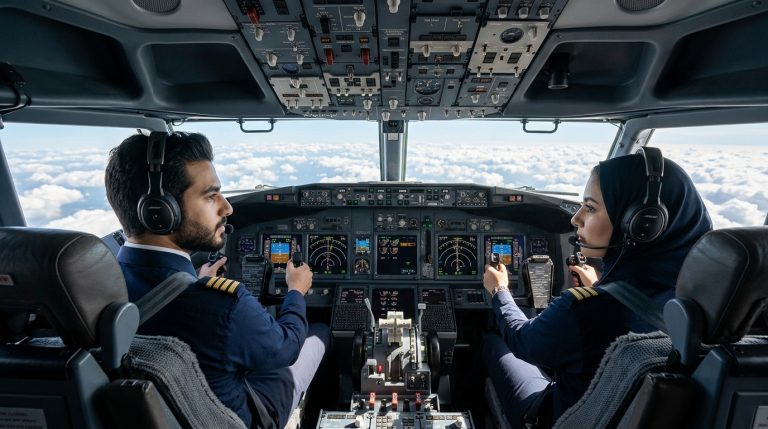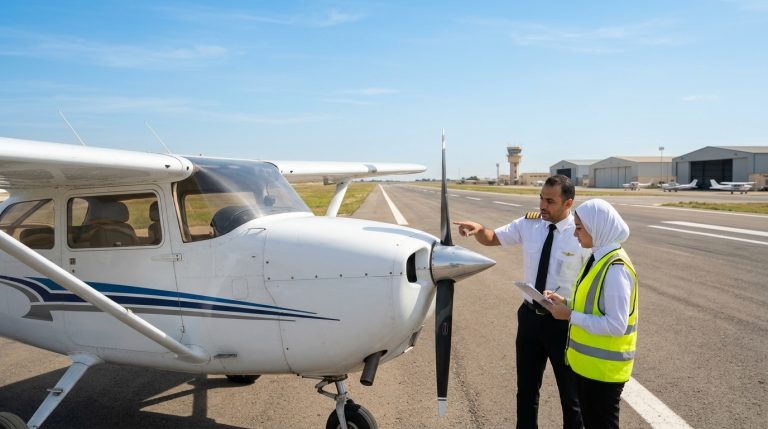
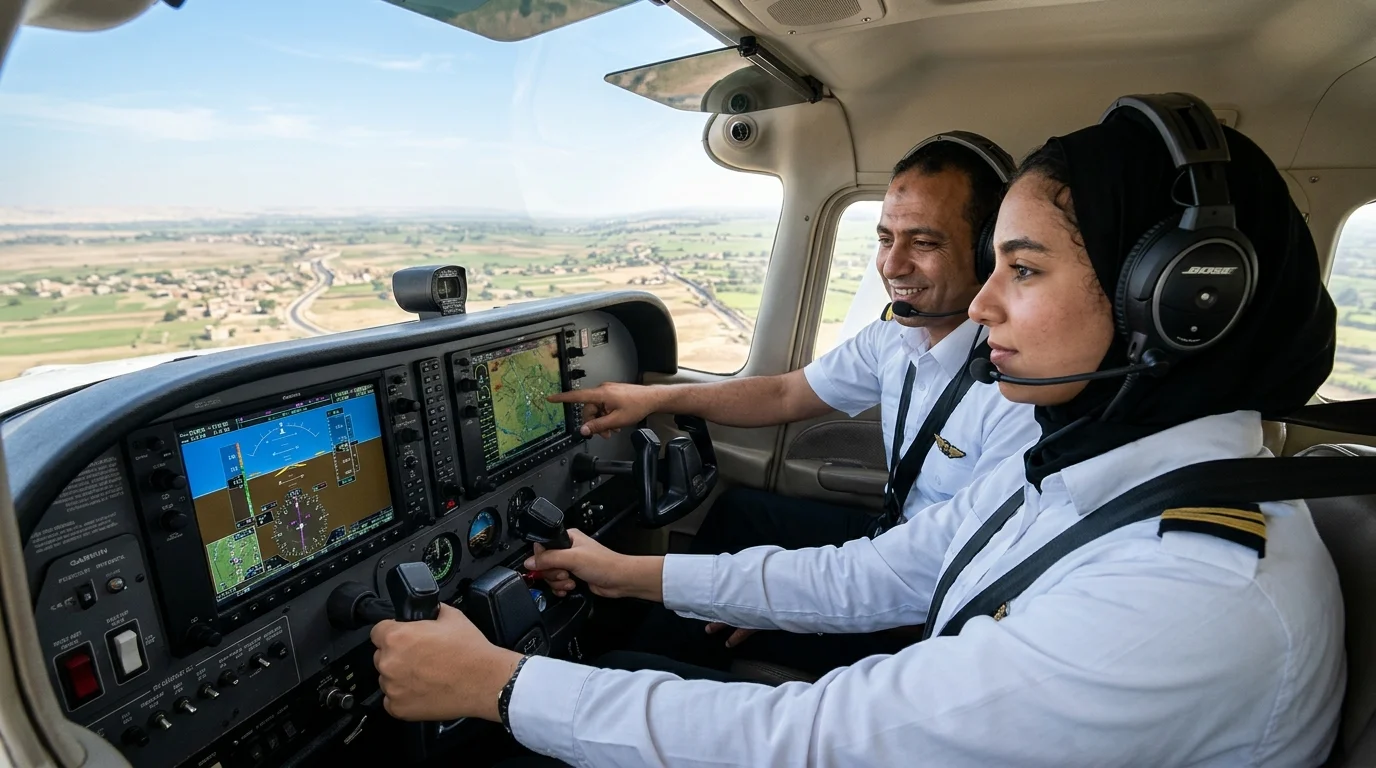
Pilot certification is the formal qualification awarded by a recognized civil aviation authority verifying that an individual possesses the theoretical knowledge and aeronautical skills required to operate an aircraft safely. For aspiring aviators in Egypt and across the Middle East, the standard path moves progressively from a Private Pilot License (PPL) to a Commercial Pilot License (CPL), accumulating approximately 200 flight hours. Obtaining a recognized civil pilot certification opens global career pathways in commercial passenger and cargo aviation.
Choosing to pursue professional flight training is an exciting and life-changing decision for students and their families. However, navigating the stages, medical standards, regulatory accreditations, and program fees requires clear, verified information. This comprehensive guide outlines the pilot certification hierarchy, admission criteria, international license conversion, and the academic equivalence available to graduates.
Understanding the Pilot Certification Hierarchy
Civil aviation training follows a structured, internationally standardized framework established by the International Civil Aviation Organization (ICAO). Rather than earning a single license all at once, a student completes successive licensing stages, each building upon the last in complexity and operational privilege.
1. Private Pilot License (PPL)
The Private Pilot License is the foundational milestone in your pilot certification journey. It introduces basic flight maneuvers, visual flight rules (VFR), air navigation, aerodynamics, and solo flights. While a PPL allows you to command an aircraft and carry passengers, you cannot receive financial compensation for your flying services. At SkyTeam Aviation Academy, the PPL stage typically takes between 3 to 6 months to complete.
2. Commercial Pilot License (CPL)
The Commercial Pilot License is the professional benchmark required to work as a pilot and be paid for flying services. The CPL curriculum refines precision handling, instrument flying (operating purely by cockpit instruments under adverse weather conditions), and multi-engine aircraft management. Achieving full commercial pilot certification takes approximately 18 months in total (including the integrated PPL phase) and brings the student to about 200 flight hours.
3. Type Rating and Airline Transport Pilot Standards
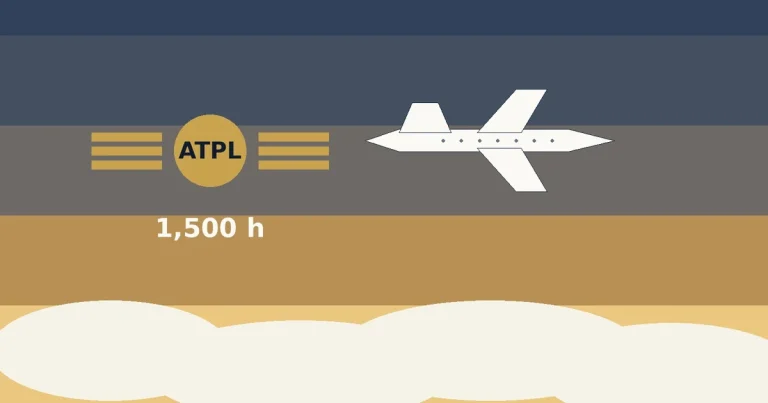
After earning a CPL, pilots targeting commercial airline cockpits often pursue an advanced Type Rating on specific jetliners, such as the Airbus A320 or Boeing 737-800. While the Airline Transport Pilot License (ATPL) represents the highest civil certification level—requiring extensive airline experience—a fresh CPL graduate with a Multi-Engine and Instrument Rating has completed the prerequisite professional foundation for regional and international carrier recruitment.
Eligibility Requirements to Begin Pilot Certification
Before stepping into an aircraft or flight simulator, candidates must meet specific academic, linguistic, and physiological standards to ensure they can handle professional aviation curricula safely.
Academic Credentials
Applicants must hold a recognized high school diploma (Thanaweya Amma) or its accepted international equivalent, including American Diploma, IGCSE, GED, or certificates issued by education ministries outside Egypt. Students under 18 years old are also eligible to apply: early admission is available starting from Grade 10 or Grade 11, allowing students to commence studies while finishing their schooling.
Language Proficiency
Because English is the mandatory international language of air traffic control and aviation technical manuals, candidates must reach a minimum of ICAO Level 4 (approximately equivalent to a B1 level). Candidates whose English proficiency is currently below this standard are not turned away; SkyTeam Aviation Academy provides an intensive 3-level English preparatory course prior to travel to bring communication skills up to standard.
Civil Aviation Medical Assessment
Flight safety depends upon physical and cognitive fitness. In Egypt, candidates undergo an official civil medical examination arranged and supervised by the academy, conducted at either Hasabo International Hospital or the Medical Commission of the Egyptian Civil Aviation Authority. The cost of this comprehensive exam is included in the registration fees. Key medical criteria evaluate vision, hearing, cardiovascular health, and general fitness. Conditions that may disqualify an applicant include color blindness, keratoconus, severe unmanaged chronic illness, or uncorrected hearing impairments. Final medical fitness is determined solely through the official medical examination.
The Training Path: Practical Flight and Ground School
SkyTeam Aviation Academy structures professional pilot certification into a rigorous, internationally compliant training model designed to optimize skill acquisition and safety.
Theoretical ground school and practical flight hours take place through our partner flight school in South Africa (SACAA approved). South Africa provides an optimal training environment with diverse terrain, professional airspace infrastructure, and dependable weather conditions that enable consistent flying schedules.
The academy organizes four intakes each year—one every three months—ensuring flexibility for students finishing their schooling or sorting out travel documentation. The complete CPL program covers approximately 200 flight hours across single-engine and multi-engine aircraft, alongside rigorous ground school lectures covering meteorology, flight planning, principles of flight, and civil air law.
Pilot Certification Comparison Table
The following overview summarizes the main training stages, flight time commitments, and operational privileges involved in professional pilot certification:
| Certification Level | Typical Duration | Target Flight Experience | Primary Operational Privileges |
|---|---|---|---|
| Private Pilot License (PPL) | 3 to 6 months | Foundational hours & solo flights | Recreational flying; carrying non-commercial passengers under visual conditions. |
| Commercial Pilot License (CPL) | Approx. 18 months (total program) | Approx. 200 total flight hours | Professional commercial flying, multi-engine and instrument operations for compensation. |
| Type Rating (Airbus A320 / Boeing 737-800) | Specialized track | Type-specific simulator & aircraft syllabus | Qualifies the CPL holder to operate specific commercial jet airliners for scheduled airlines. |
License Recognition, Conversion, and University Equivalence
A primary concern for parents and students is ensuring that foreign flight qualifications translate smoothly into domestic and international employment opportunities.
SACAA to Egyptian Civil Aviation Authority Conversion
Your flight license is officially issued by the South African Civil Aviation Authority (SACAA). Because SACAA is an active member state of the International Civil Aviation Organization (ICAO)—which includes 193 member nations such as Egypt—your credentials rest on recognized international standards. Converting your license to an Egyptian license is an administrative transition between two ICAO-member authorities. Candidates complete conversion examinations in three country-specific subjects: Egyptian air law, meteorology, and navigation. Conversion costs set directly by the Egyptian Civil Aviation Authority can change, so our advisors confirm the current amounts for the CPL and any Type Rating.
Official University Degree Equivalence in Egypt
A major milestone for professional pilots trained through this pathway is academic recognition. Under Supreme Council of Universities Decision No. 210 (dated October 7, 2024), commercial pilot licenses (and flight instructor / ATPL licenses) issued by the Egyptian Civil Aviation Authority are officially equated to a higher university qualification (مؤهل عالي) under Egyptian Universities Law 49/1972. As long as the applicant holds a Thanaweya Amma certificate or its recognized equivalent, the pilot qualification confers bachelor’s-level equivalence. This grants graduates the right to enroll in university postgraduate programs or transition professional career paths within Egyptian institutions.
Program Investment and Cost Transparency
Financial clarity is essential when planning professional aviation training. SkyTeam Aviation Academy maintains straightforward pricing without hidden program surcharges.
- Tuition Fee: The pilot program (CPL) tuition is 46,000 USD plus registration fees. This tuition covers the comprehensive training program and includes all internal examination fees.
- Installment Structure: Fees are distributed across manageable phases: 22,000 USD is paid across 3 installments before traveling to the flight school. The remaining balance is paid over 12 months starting from your travel date, spanning an overall payment timeline of approximately 18 months from contract signing.
- Living Expenses: Personal expenses (accommodation, food, local transport, airline tickets, and pocket money) are separate from academic tuition. In South Africa, total living expenses average around 1,000 USD per month (varying up to 1,200 USD or more based on individual spending).
- Student Accommodation: Students live in a secure compound next to the study location, and our advisors explain the housing details and costs. Housing is situated within a secure compound close to essential services. Each flat contains two bedrooms, giving each student a private bedroom and en-suite bathroom, while sharing the kitchen and living room. Daily round-trip transportation between the housing and airfield is included.
Post-Graduation Horizon and Aviation Careers
The aviation market across Egypt, the Gulf, and the broader Middle East is currently experiencing sustained demand for qualified flight crew, driven by fleet expansions and regional network growth. While no reputable institution guarantees airline positions, SkyTeam Aviation Academy offers dedicated career support to maximize every graduate’s potential.
Top-performing academy graduates may be offered employment opportunities directly as flight instructors. Working as a certified flight instructor enables young pilots to build valuable multi-crew and command flight hours while evaluating long-term airline vacancies. Furthermore, the academy actively supports graduates with airline interview opportunities across around 10 commercial airlines, aligned with airline hiring windows and individual flight qualifications.
Required Initial Documentation
Prospective students should prepare the following initial documents to begin their registration and admissions screening:
- High school graduation certificate (Thanaweya Amma or equivalent accredited foreign diploma).
- Valid passport or national ID card.
- Original birth certificate (for applicants under 18) or a computerized birth certificate featuring the triple number (شهادة ميلاد مميكنة بالرقم الثلاثي) for Egyptian males aged 18 and older.
- Six recent personal photographs against a plain white background.
- Travel paperwork, such as a military service deferment or police clearance certificate (for eligible Egyptian male applicants).
- Satisfactory completion of the academy-arranged civil aviation medical examination.
Frequently Asked Questions About Pilot Certification
Can I start pilot certification before graduating high school?
Yes. SkyTeam Aviation Academy accepts early admissions for students starting from Grade 10 or Grade 11 depending on individual review. A student can travel and commence flight training while completing Grade 11.
Is a commercial pilot license recognized outside South Africa?
Yes. The license is issued by the SACAA, an active member of ICAO along with 192 other countries, including Egypt. Because both nations adhere to ICAO standards, converting your SACAA pilot certification to an Egyptian Civil Aviation Authority license requires only three local theory exams covering air law, navigation, and meteorology.
Does the 46,000 USD tuition cover accommodation and living costs?
No. The 46,000 USD tuition covers the complete academic flight and ground training program as well as examination fees. Personal living expenses, including flights, daily food, pocket money, and housing, remain separate.
Can Egyptian male students obtain a military service deferment for travel?
Yes, eligible Egyptian male students can obtain required travel paperwork, such as a military service deferment, in accordance with applicable student travel regulations.
Does the pilot license equate to an academic university degree?
Yes, in Egypt. Under Supreme Council of Universities Decision No. 210 (issued October 7, 2024), an Egyptian commercial pilot license issued by the Egyptian Civil Aviation Authority is formally recognized as equivalent to a higher university qualification (مؤهل عالي), provided the pilot holds a high school certificate (Thanaweya Amma or its equivalent).
Launch Your Aviation Career with SkyTeam
Earning your commercial pilot certification requires discipline, dedicated flight practice, and an accredited training pathway you can trust. SkyTeam Aviation Academy stands ready to guide you through every milestone, from your initial civil medical assessment in Cairo to multi-engine flight hours at our partner flight school in South Africa (SACAA approved).
Visit our Cairo headquarters at 108 Hassan Maamoun Street, Nasr City, open Sunday through Thursday from 10:00 AM to 6:00 PM, or take the first step toward the flight deck today: Check your eligibility and speak with a SkyTeam admissions advisor.