What is the Difference Between ICAO and EASA?
The aviation industry has grown significantly over the past decade in terms of accessibility, affordability, and frequency. As more airlines enter the market and international air traffic continues to expand, safety and standardisation become even more important. Pilots, operators, training organisations, and airlines all work within regulatory frameworks that help maintain a high level of safety across the industry.
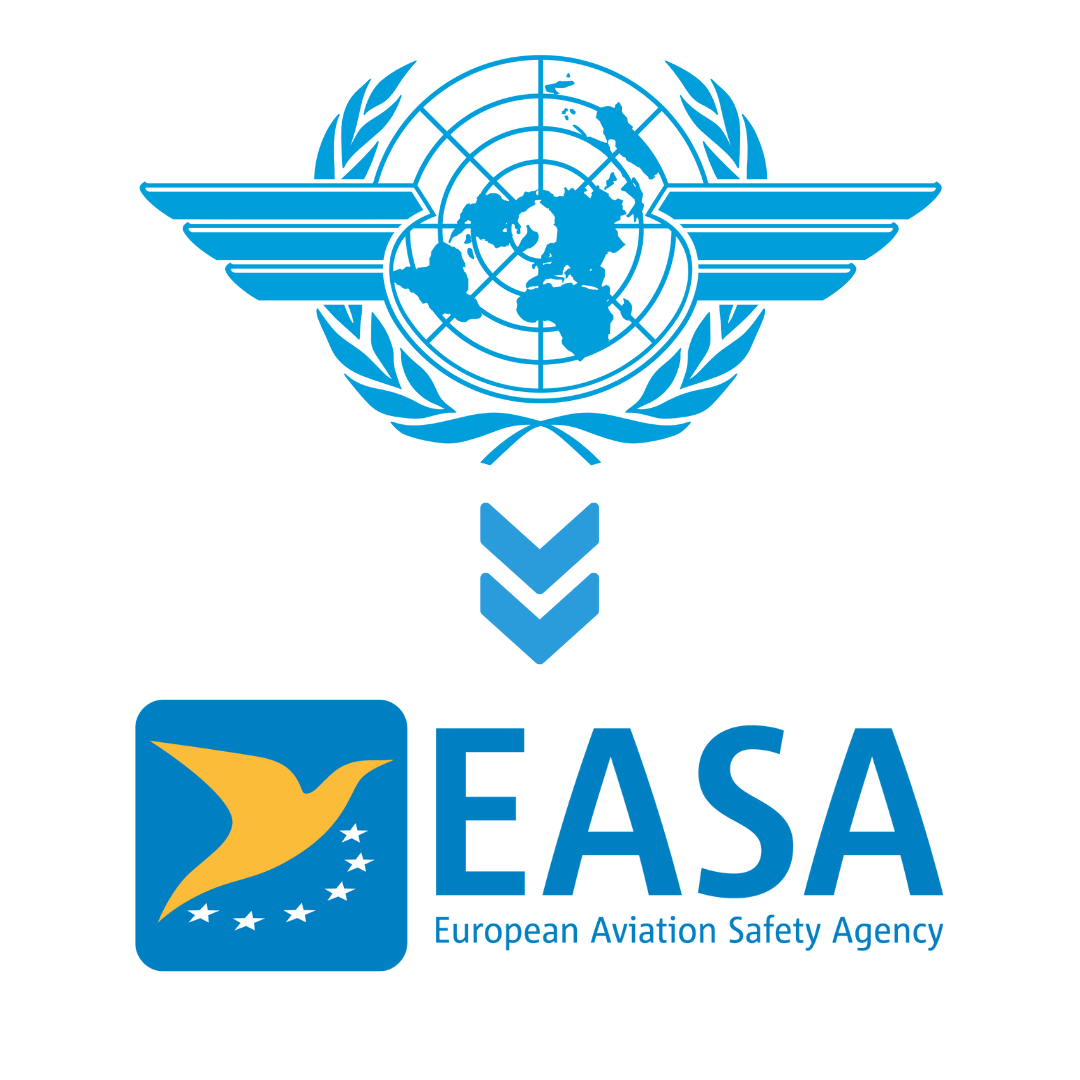
When people first encounter aviation regulation, two names often appear: ICAO and EASA. They are both important, and they do overlap in some areas, but they are not the same thing. To understand the difference properly, it helps to start with what each one is, what it oversees, and how their roles connect in practice.
Why this comparison matters
This topic matters because pilots do not train or operate in a vacuum. Licensing, operations, aircraft certification, training standards, and safety oversight all sit inside larger regulatory systems. If a student pilot or aspiring commercial pilot does not understand the difference between international standards and regional rules, a lot of aviation terminology becomes confusing very quickly.
What Is ICAO?
ICAO stands for the International Civil Aviation Organisation. It is a United Nations specialised agency created to support international civil aviation and help states achieve a high degree of uniformity in regulations, standards, procedures, and organisation. ICAO’s core role is global rather than regional. It does not act as a country’s aviation authority, nor does it replace national regulators. Instead, it sets the international framework that states use as a reference point.
What ICAO oversees
ICAO is best known for developing international Standards and Recommended Practices (SARPs) under the Chicago Convention system. These cover a wide range of areas, including licensing, charts, safety management, search and rescue, security, and other technical areas that support international aviation. The purpose is to make global aviation safer, more consistent, and easier to operate across borders.
What Is EASA?
EASA stands for the European Union Aviation Safety Agency. It is the aviation safety agency of the European Union and plays a regional rather than a global regulatory role. EASA supports common aviation safety rules across the EU system and handles major technical and regulatory functions, including rulemaking support, standardisation activities, certification, and approvals in specific areas.
What EASA oversees
EASA’s responsibilities include helping shape common safety rules, issuing certification specifications and guidance material, certifying aircraft and related products, approving certain organisations, and supporting consistent implementation of aviation safety legislation across member states. It is also heavily involved in aircrew regulation, including pilot licensing requirements under the European framework.
|
Area |
ICAO |
EASA |
Overlap |
|---|---|---|---|
|
Geographic scope |
Global international framework |
European Union / EASA system |
Both influence cross-border aviation |
|
Core role |
Sets international standards and recommended practices |
Applies and develops regional European aviation rules |
Both affect safety and operational consistency |
|
Licensing |
Sets baseline international standards for licences |
Regulates European aircrew rules and licensing requirements |
Both touch pilot competence and licensing |
|
Aircraft certification |
Sets international framework and guidance |
Certifies aircraft, engines, propellers, parts, and some approvals |
Both relate to aircraft safety |
|
Rulemaking |
Develops SARPs and international provisions |
Develops and supports EU aviation regulatory material |
Both shape aviation compliance |
|
Safety oversight |
Promotes harmonised global safety approaches |
Standardisation, inspections, and implementation support in Europe |
Both focus heavily on safety |
|
Operations across borders |
Helps states align internationally |
Helps create consistency across European member states |
Both support smoother international operations |
This comparison is simplified on purpose. In real-world aviation practice, national authorities, regional agencies, operators, and international bodies all interact with one another. But at a basic level, ICAO provides the global framework, while EASA operates as a regional regulatory authority within Europe.
The main difference between ICAO and EASA
The clearest difference is scope. ICAO is international. EASA is regional. ICAO builds the global baseline that supports international civil aviation, while EASA turns aviation safety and regulatory requirements into a more specific European system with direct practical consequences for licensing, certification, oversight, and operational compliance.
ICAO as the Global Aviation Framework
A useful neutral reference point here is the International Civil Aviation Organisation itself. ICAO is a UN specialised agency that helps countries cooperate and align around international civil aviation standards, while also developing Standards and Recommended Practices that support global safety and consistency. That makes the ICAO standards framework a strong, neutral source for this topic, especially when explaining how ICAO differs from EASA at a broader international level.
ICAO creates the framework
ICAO’s role is to help states align on common standards so that aircraft can operate across international boundaries with greater consistency and safety. That is why ICAO matters so much in areas like international licensing standards, phraseology, safety management, and technical annexes. It is about global harmonisation more than local enforcement.
EASA applies a regional system
EASA, on the other hand, works at a more practical regional level. It supports the development of European aviation rules, handles certification responsibilities, and maintains regulatory material that affects pilots, operators, organisations, and manufacturers working within the EASA system. This is why a pilot dealing with European training or licence conversion often needs to understand EASA requirements in much more detail.
How does this affect pilot training?
For aspiring pilots, this difference is not just theoretical. It affects how training is structured, how licences are understood, and how progression works, depending on the system a pilot is operating within. A student trying to become a professional pilot will eventually realise that regulations shape everything from training standards to medical requirements to licence privileges.
That broader professional context is why everything that you need to know about commercial pilot fits naturally into this topic. Once someone understands the difference between ICAO and EASA, it becomes easier to understand how commercial pilot training and licensing pathways are structured in the real world.
Licensing standards are not all identical in practice
Your original article mentions the EASA Airline Transport Pilot Licence being recognised across European nations, and that is directionally important. In practice, EASA’s aircrew framework contains detailed rules for flight crew licensing, while ICAO provides the broader international standard-setting environment behind global civil aviation. EASA’s published aircrew rules explicitly cover flight crew licensing and related administrative requirements, while ICAO remains focused on international harmonisation rather than acting as a regional licensing agency.
ICAO, EASA, and aircraft operations
The distinction also matters once pilots move beyond basic licensing and into aircraft operation, aircraft type differences, and more advanced flight environments. Regulation does not only affect who can hold a licence. It also affects how aircraft are certified, how operators comply, and how training expands as aircraft and operations become more complex.
This is where a topic like find out more about multi-engine ratings becomes relevant. A pilot progressing to more advanced aircraft needs to understand that training and aircraft privileges are governed by a regulatory structure. In other words, the move from simpler aircraft to more complex operations is not just a flying challenge. It is also a compliance and licensing issue shaped by the system under which the pilot is training.
EASA becomes more visible in technical implementation
EASA is especially visible when the conversation moves into detailed regulatory implementation, certification, and formal European aircrew rules. For example, EASA is responsible for aircraft certification in the EU, and its aircrew rules set out detailed requirements for pilot licences and ratings. That makes EASA highly practical for pilots and organisations operating within or working with the European system.
Why this matters for airline-level progression
The more advanced the pilot’s path becomes, the more important these distinctions get. Someone aiming for airline operations cannot rely on vague ideas about “aviation rules.” They need to understand which standards are international, which are regional, and how those systems affect licence validity, progression, and operational opportunities.
That is why the Airline Transport Pilot License (ATPL) belongs naturally in this conversation. Under EASA rules, ATPL requirements are defined in a detailed aircrew regulation that includes prerequisites and flight-time requirements. For example, EASA’s published aircrew rules state that applicants for an ATPL(A) need a minimum of 1,500 hours of flight time in aeroplanes, alongside other conditions and experience requirements.
Understanding the system helps with career planning
For students, the practical lesson is simple: if you do not understand the regulatory system behind your training, it becomes harder to plan your progression properly. Understanding ICAO helps you understand the international baseline. Understanding EASA helps you see how that baseline translates into a specific regional regulatory environment.
Conclusion
ICAO and EASA are both important, but they are not interchangeable. ICAO operates at the international level and helps establish global standards that make civil aviation worldwide more consistent and safer. EASA works at the European regional level and plays a more direct regulatory and technical role in rulemaking, certification, licensing, and implementation.
So if someone asks what the difference is, the clearest answer is this: ICAO sets the international framework, while EASA applies and develops a European regulatory system within that broader aviation world. Once that is understood, many pilot training, licensing, and operational topics start to make much more sense.