What Is the Pilot in Command?
The term pilot in command, often shortened to PIC, is one of the most important concepts in aviation. It also happens to be one of the most misunderstood. Many people assume the pilot in command is simply the person physically controlling the aircraft at a given moment, but that is not the full meaning. In aviation, the pilot in command is the person with final authority and final responsibility for the operation and safety of the flight.
That distinction matters because a pilot can be handling the controls without being the pilot in command. In multi-crew operations, for example, one pilot may be flying the aircraft while another remains the PIC for legal and operational purposes. FAA regulations make this clear by stating that the pilot in command is directly responsible for and is the final authority on the operation of the aircraft.
Why the pilot in command role matters
This is not just a technical phrase pilots use in logbooks. The pilot-in-command role affects responsibility, decision-making, legal accountability, emergency authority, and career progression. Once someone understands what PIC really means, it becomes much easier to grasp flight logging, cockpit hierarchy, and how pilots progress to more advanced professional roles.
An Explanation of the Pilot in Command
At its core, the pilot in command is the pilot legally responsible for the aircraft and the safety of the operation. That means responsibility begins before takeoff and continues through taxi, departure, cruise, approach, landing, and post-landing movement. It is not limited to the time when the aircraft is airborne.
PIC is the Final authority
This is the first thing readers should understand. The pilot in command is not defined only by who is touching the controls. The PIC is defined by authority and responsibility. FAA rules state that the pilot in command is the final authority on the operation of the aircraft, and in an in-flight emergency requiring immediate action, the PIC may deviate from the rules to the extent necessary to meet that emergency.
That is why the role is so serious. The PIC is the pilot who ultimately owns the decision-making burden for the flight.
What Are the Responsibilities of the Pilot in Command?
The responsibilities of the pilot in command go well beyond basic aircraft control. The role includes operational judgement, safety leadership, legal accountability, and the authority to make final decisions when normal procedures are no longer enough.
Responsibility for the aircraft’s operation
The PIC is responsible for the operation of the aircraft from a practical and legal standpoint. That includes ensuring the flight is conducted safely, the aircraft is operated properly, and decisions are made with the appropriate level of care. This is why PIC time is so highly valued in aviation. It reflects more than hours in the air. It reflects time spent carrying actual responsibility.
Final authority in normal and abnormal situations
The PIC also has final authority in situations requiring a decision. In normal operations, that means making judgment calls about whether the flight should proceed, how it should be conducted, and when conditions require a change of plan. In abnormal or emergency situations, that authority becomes even more important. FAA rules specifically state that the PIC may deviate from Part 91 rules to the extent required to meet an emergency requiring immediate action.
Safety of people on board and on the ground
Your original draft was right to emphasise this. The pilot in command must understand the aircraft, the environment, and the procedures well enough to protect people on board and, when relevant, people on the ground. That is what makes the role more than just a cockpit title.
How Is the Pilot in Command Chosen?
This depends on the type of flight, the type of pilot involved, and the operational environment.
Student and private pilot stage
In early training, a student pilot may begin logging PIC time during solo operations under the rules that apply to student pilots. FAA logbook rules state that a student pilot may log pilot-in-command time only when the student is the sole occupant of the aircraft, with limited specific exceptions. (ecfr.gov)
Once a pilot earns a Private Pilot Licence, they can begin acting as PIC within the privileges and limits of that certificate. That is one reason the private stage matters so much. It is where many pilots first begin carrying real command responsibility.
Commercial and airline operations
In commercial and airline environments, the PIC is usually the commander or captain. In multi-crew operations, there may be more than one qualified pilot in the cockpit, but one person is designated as the pilot in command for that flight. That is the person with final authority and final responsibility.
This also connects naturally to everything that you need to know about a commercial pilot, because once aviation becomes professional, PIC is no longer just about solo privilege or logbook building. It becomes part of a structured operational role with much greater consequences.
PIC Qualifications
The qualifications for acting as PIC depend on the aircraft, the type of operation, the pilot’s certificate, and any class, category, or type rating requirements that apply. Your original draft pointed in the right direction here, but it needed sharper wording.
The pilot must be appropriately qualified
To act as pilot in command, the pilot must hold the relevant certificate and ratings required for that aircraft and operation. FAA’s definition and operating rules make clear that PIC authority is tied to legal qualification, not just cockpit presence.
PIC status changes with the stage of the pilot’s career
At the student stage, PIC opportunities are limited and controlled. At the private stage, PIC becomes part of personal non-commercial flying privileges. At the commercial and airline stages, PIC becomes associated with greater responsibility, more experience, and command authority in more complex environments.
That is why the progression matters. Becoming PIC at one level is not the same as becoming PIC in a large multi-crew commercial operation.
How Far in Advance Can You Log PIC Time?
This is one of the most common questions pilots argue about, and your original draft was right to highlight that PIC logging causes confusion. But it needs to be explained carefully, because “logging PIC” and “acting as PIC” are related, yet not always identical concepts.
Student pilot PIC logging
A student pilot may log PIC time only in the situations permitted under the regulations, most commonly when the student is the sole occupant of the aircraft. FAA logbook rules say exactly that.
Certificated pilot PIC logging
For certificated pilots, PIC logging can extend beyond simply being the sole occupant. FAA rules allow a pilot to log PIC time when the pilot is the sole manipulator of the controls of an aircraft for which the pilot is rated or has privileges, among other situations. That is why PIC logging becomes such a frequent point of debate among pilots.
The important point is this: logging PIC is not just about ego or status. PIC time is highly valued because it reflects command-related experience, which is a major factor in advanced training and airline progression.
How Do You Become a Pilot in Command?
Becoming PIC is really a matter of progression. A pilot does not jump straight into advanced command authority. It develops in stages.
Start with foundational training
At the beginning, the pilot learns the basics of aircraft control, communication, procedures, planning, and safety. This is why early licences matter. They do not just let a student fly; they prepare the student to eventually take responsibility.
Build solo and command experience
As pilots train and gain legal privileges, they begin accumulating the kinds of experience that lead to PIC time. Solo operations, private pilot flying, and later commercial flying all expand that responsibility depending on the level reached.
Progress into more advanced operations
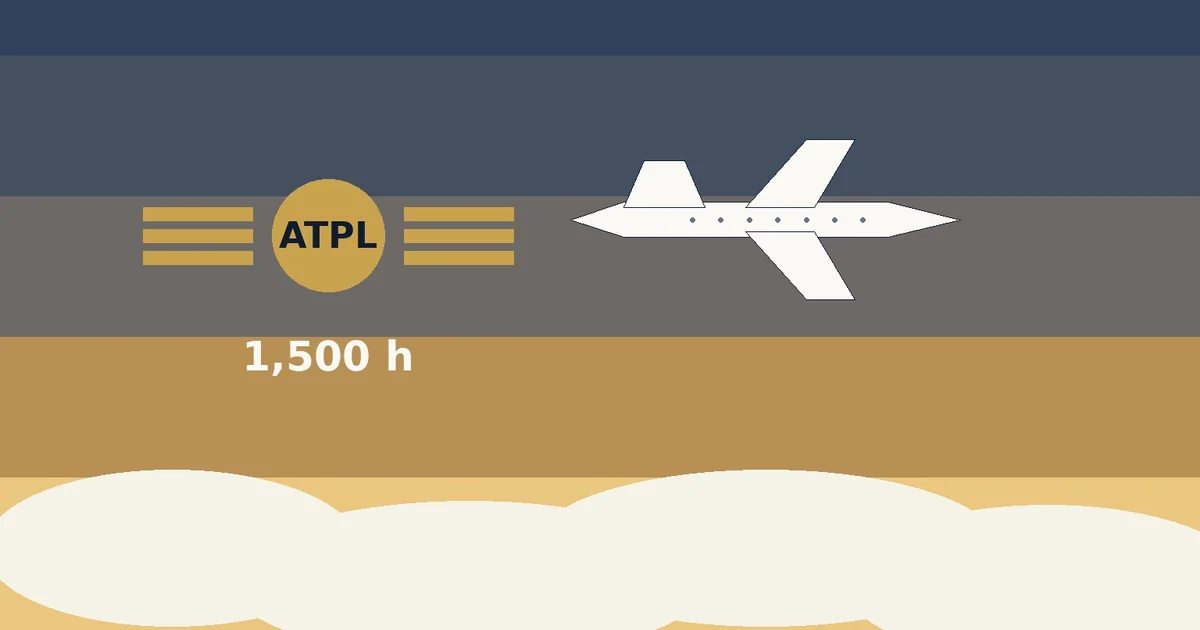
For pilots pursuing professional flying, PIC becomes more important over time because command experience is closely tied to career progression. This is why advanced licence pathways matter. A pilot who aims for airline-level authority and greater command responsibility will usually be building toward qualifications such as an Airline Transport Pilot License (ATPL), which requires greater experience and higher operational standards.
PIC and Night Operations
One useful way to understand the PIC’s role is to examine how it changes under more demanding conditions. Night flying is a good example. A pilot in command operating after dark still carries the same final responsibility, but now must manage reduced visual cues, stronger planning discipline, and greater reliance on procedures and awareness.
That is why the basics of night flying fit naturally into this topic. It shows that PIC is not just about holding authority on paper. It is about exercising that authority safely in real operating conditions.
Why PIC Time Matters So Much in Aviation
Pilots talk about PIC time constantly because it is one of the clearest indicators of command-related experience. It signals that a pilot has spent time not just flying, but carrying the weight of responsibility attached to the flight.
It is tied to progression
Aviation career pathways often measure more than total hours. They also value the kind of time a pilot has accumulated. PIC time is especially important because it reflects decision-making responsibility rather than just seat occupancy.
It reflects trust and competence
A pilot trusted to act as PIC is entrusted with the operation, safety, and final decisions for that flight. That is why PIC time carries more meaning than casual readers often realise.
Conclusion
The pilot in command is not simply the person moving the controls at a particular moment. The PIC is the pilot with final authority and final responsibility for the operation and safety of the aircraft. That role matters in every phase of flight and becomes especially important when decisions must be made quickly, safely, and lawfully.
For student pilots, PIC begins as a tightly controlled privilege. For private pilots, it becomes part of real flying independence. For commercial and airline pilots, it grows into a role tied to command, professionalism, and career progression. That is why understanding PIC is so important. It is one of the clearest ways to understand how responsibility works in aviation.
If you want, send the next one.